Like most people, a chef knife is my go-to choice in a kitchen to do most tasks like cutting and slicing but I feel it is difficult to perform precision tasks due to its weight and size. I shared this problem with my mom and she suggested I try a utility knife from our knife block and since then, I haven’t looked back.
I’m now able to precisely cut small foods effortlessly due to the small blade and lightweight profile. If you are struggling with such tasks and haven’t used this knife before, let me share some details about it in this post.
What is a utility knife?
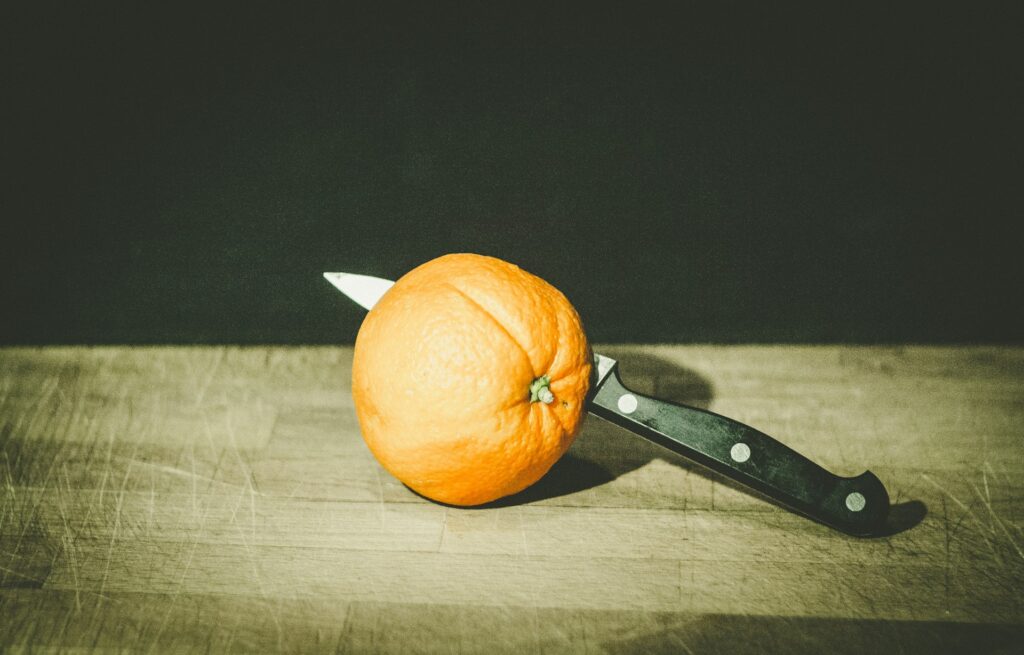
It is a compact all-rounder kitchen knife with 4-9 inch blade and comes between a chef knife and a paring knife. It is also known as “prep knife” and “petty knife”. It comes with both serrated and straight edges.
This blade is perfect for precision cuts and controlled slicing. Due to a narrow blade and lightweight profile, it is an excellent choice for slicing ingredients that stick to the blade while chopping.
One of my favorite ones is Tojiro Knife Petty. The overall length of the knife is 9.1 inches and the blade is about 4.7-inches. It weighs roughly about 70 grams and I find it easy to do many slicing/ cutting tasks with it effortlessly.
How do I use this knife?
1. Slicing fruits
The compact blade lets me slice fruits such as apple, pears, citrus, bananas, grapefruits, watermelon, papaya and pineapples. These fruits don’t require a larger blade and my utility knife does the job of slicing well.
2. Trimming Meats
The wide blade helps me tender pieces of meat with minimal effort while cutting. I usually prefer this knife for chicken as I have other knives to process larger meats.
3. Prepare Vegetables:
The lightweight knife is my go-to-choice for preparing vegetables such as carrots, onions, potatoes, cucumbers and bell peppers.
How to choose the right knife
There are 3 things I pay attention to while picking this knife.
1. Knuckle Clearance
It is crucial that you need to select the right one based on your hand size.
If you have a smaller hand, you would be fine with straight blade knives as it could cover your knuckles which is essential for cutting anything.
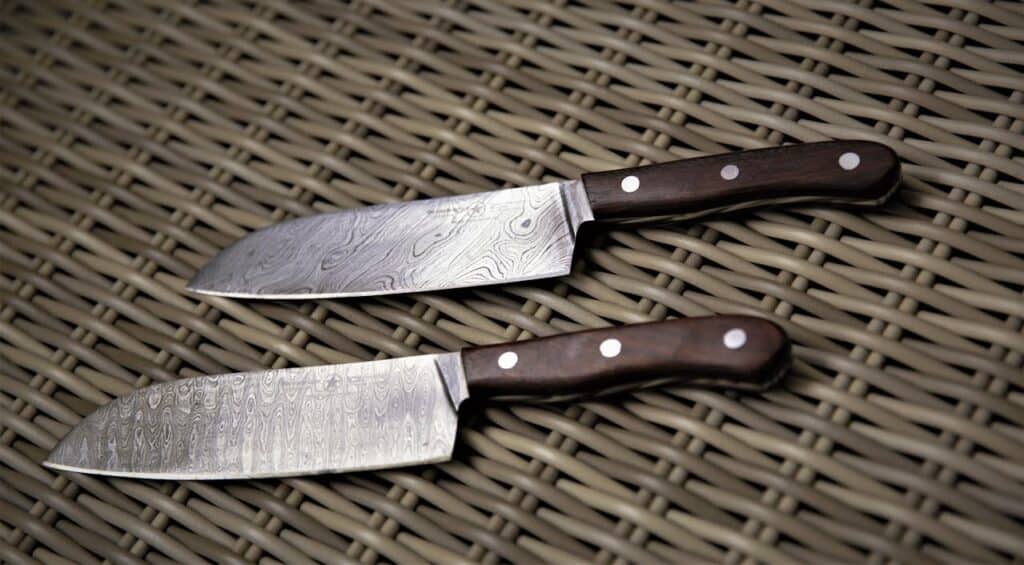
If you have a larger hand, you need to use a triangular-shaped knife as the heel would cover the knuckle and you’ll be able to easily cut with it. My hands are bigger and the Tojiro knife I own has a similar blade shape and I’ve no issues doing rocking motions with it.
2. Steel
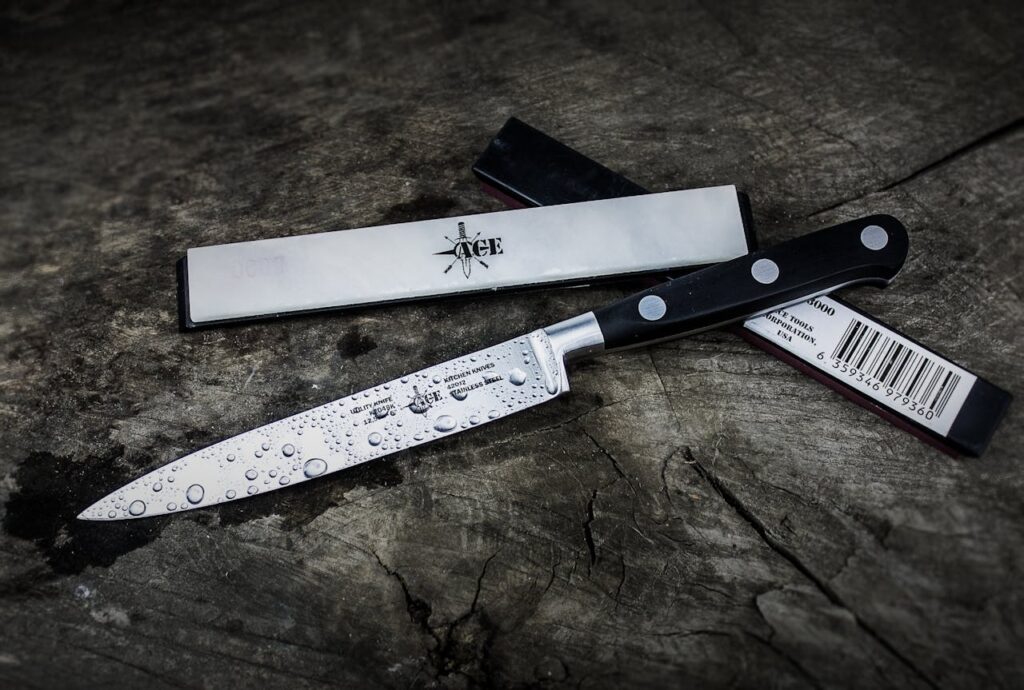
There are two popular steel for utility knives; carbon steel and stainless steel.
The carbon steel contains carbon and iron. Knives made out of this steel are easy to sharpen, have better edge retention and sharpness. However, they aren’t rust resistant and are more brittle. I’ve many utility blades with this knife and I don’t mind taking care of it quite often due to its excellent performance. Also, sharpening this knife is quite easy and takes less time.
Stainless steel contains carbon, iron, nickel, vanadium, molybdenum, and at least 10.5% Chromium. The addition of Chromium makes the steel harder and is corrosion resistant. Sharpening this steel is a time consuming task. I’ve owned several kitchen knives and I don’t spend time sharpening my knives because I always try to keep them sharp. You need to decide on this if you have enough time to take care of it.
3. Handle & Tang
There are two popular handle types; Western German-Style Full Tang Handles and Japanese WA Handles.
The blades western styled knives come with full tang which means it runs through the entire handle. A full tang knife provides great weight distribution, strength and durability. Brands like Wüsthof, Zwilling, and Messermeister offer these knives and I own several models and use them frequently.
These handles are made out of polyoxymethylene, micarta, pakkawood etc. They provide excellent grip and confidence while operating.
The Japanese WA handles come with 3 shapes; Octagonal, Oval and D-shaped. Unlike western knives, they usually feature partial or stick tangs, meaning the blade runs only a partway in the handle. This makes the knives lightweight and easy to use.
They are made out of wood such as; ebony, rosewood, teak, cherry, oak, maple, chestnut and other lightweight woods. Many Japanese kitchen knives sit in my knife block and I use these ones for precise work due to the level of grip they provide.
Straight vs Serrated Edge
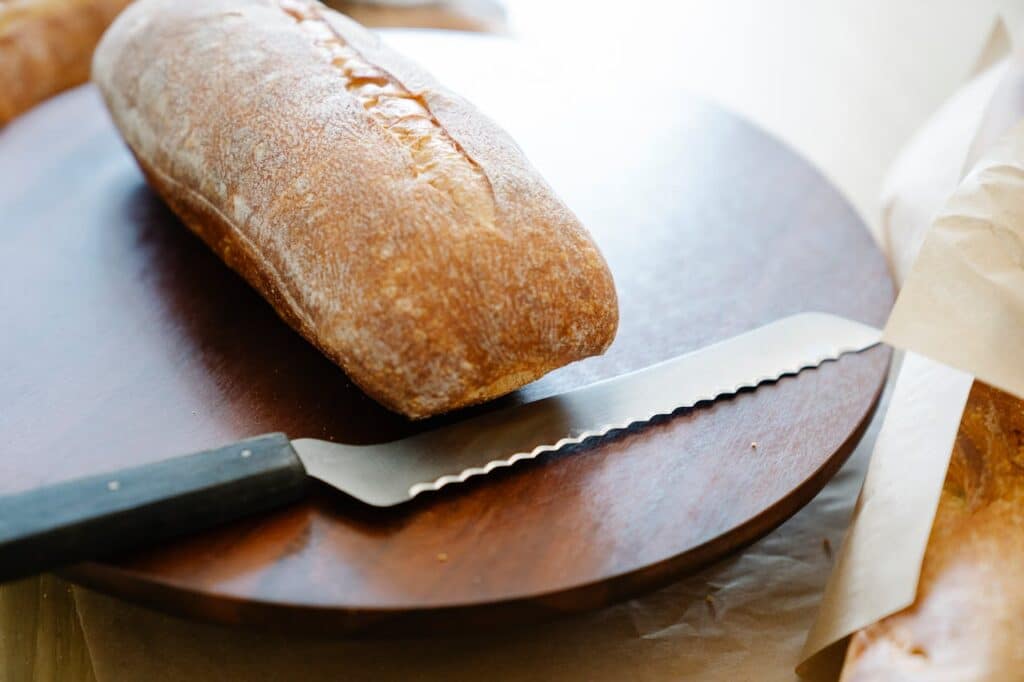
Both edges have their own use and you have to select the right one based on your needs.
If you want a knife for clean slicing and cutting for preserving the texture and the moisture of the food, straight edge utility knives would be an ideal choice for you.
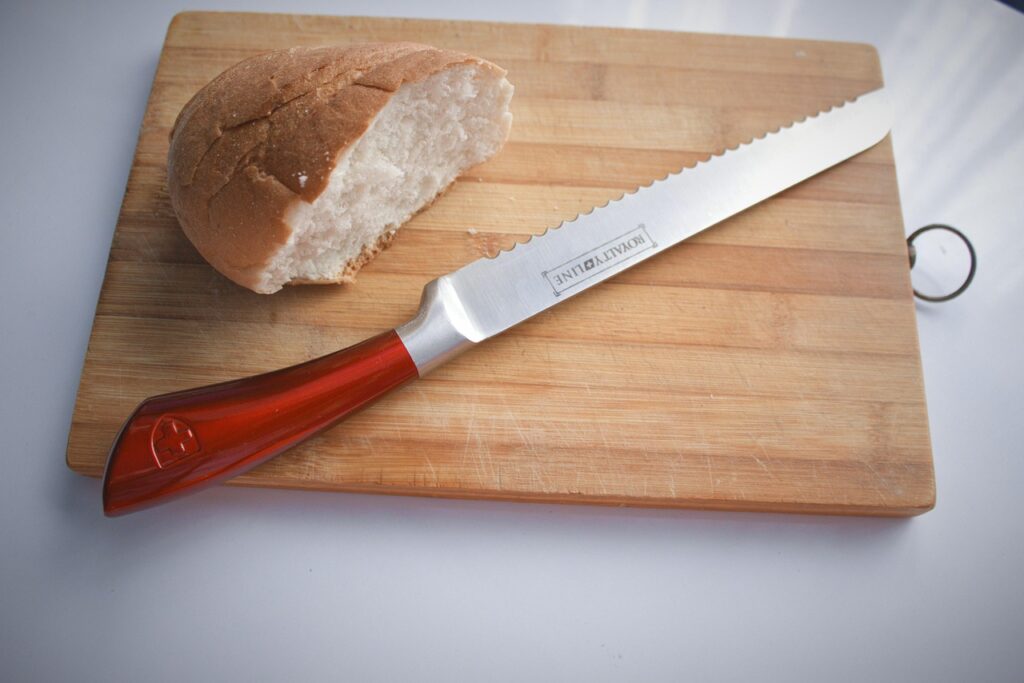
For cutting firm foods like tomatoes, breads, crusty rolls etc, serrated edges with sawing motion would be perfect.
FAQs
1. What is the purpose of a utility knife?
It is designed to fill the gap between a paring knife and a chef knife and perform moderate tasks like cutting vegetables, fruits etc.
2. What foods do you use a utility knife for?
You can use it for preparing meat, seafood, cutting sandwiches, slicing and dicing fruits and vegetables.
3. What’s the difference between a chef’s knife and a utility knife?
Chef’s knives are usually bigger with straight and wider blades designed to cut and slice large quantities of food. The utility knives are smaller in size with both serrated and straight blades that can cut and slice medium sized food with limited quantity at a moment.
4. Is a utility knife good for cutting meat?
Yes. These knives come with 4-9 inch blades and are decent enough for cutting meats.
5. Can I use a utility knife to cut vegetables?
Yes. The compact-sized blades of these knives are excellent for cutting vegetables.
Conclusion
Whenever I feel the chef knife is too big for a specific food and paring knife too small, I just pick the utility knife from my block and use it to cut, slice and chop them. I suggest you do the same for such foods and I can assure you won’t regret a bit. If you have any other questions, please let me know and I’ll get back to you shortly.