A while back one of my friends in our hunting club asked the differences between a drop point and a clip point blade when we were hunting. As I was carrying those two knives, I took them as examples and explained to him clearly. To be honest, he wasn’t the first one to ask that and there are many people who don’t know their differences yet.
These two blade shapes are my favorite choices for hunting and I’ve been using them for close to two decades now. If you aren’t aware about these two blades, let me help you out with this quick post.
What is a clip point blade?
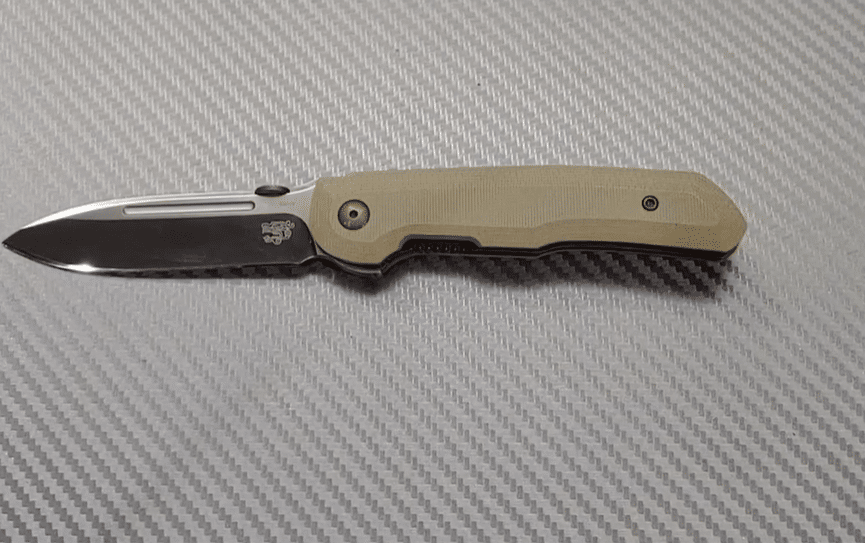
The spine of this blade gets clipped out near the tip and it’ll be thinner and sharper. It is suitable to perform precise cutting, piercing and slicing. The Bowie knife is a fine example that features a clip point style blade.
The purpose of clipping the blade is to create a lightweight and sharp blade for portability and versatility. The narrow tip and the large belly lets you slice effortlessly. I use this knife for skinning the game, field dressing, caping etc.
Due to the profile of this blade, it can’t handle stress from heavy tasks such as prying, striking, batoning etc and I highly recommend not doing the same because it is not meant for that.
Pros:
- The narrow tip allows you to cut any material delicately.
- The sharp point is suitable for piercing and self-dense.
- They are generally lighter due to the cut-out on the spine.
Cons:
- The sharp tip can handle limited stress.
- The blade may be damaged while putting an excessive amount of stress.
One of my favorite clip point blades is, Kershaw Bel Air Pocket Knife. It features a 3.05 inches MagnaCut steel clip point blade and weighs about 0.16 pounds. I’ve been using it for skinning games, slicing and sometimes, for EDC and I must say, it hasn’t let me down.
What is a drop point knife?
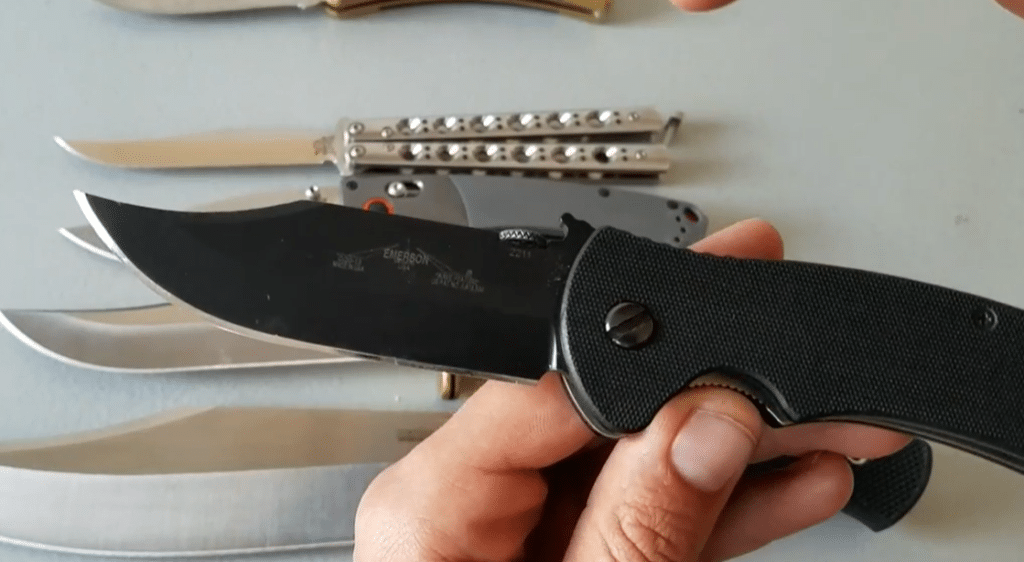
The spine on this knife gradually lowers down towards the point and features a thick and round belly. It is popular amongst outdoorsmen, survivalists, EDC and hunters like me who need a knife with great strength, durability and versatility.
Unlike a clip point whose spine has a cut out to form a sharp point, a drop point slopes down steadily and features a thicker and wider spine and tip that can resist stress from heavy tasks. Due to these qualities, it is the most popular blade shape on any knife you’ll see today.
I’m a big fan of a drop point blade and it is my go-to-choice for hunting. With this blade, I’ve done game processing, gutting, caping etc for big games and its thick belly has helped me do these tracks effortlessly.
Pros:
- The strong and thick tip resists stress from demanding tasks like batoning, wood carving, chopping etc.
- The centralized tip provides the control and balance to perform any task with ease.
- The large belly makes the blade versatile, suitable for various tasks such as; EDC, hunting, survival, outdoor activities, hiking etc.
- It is easy to sharpen.
Cons:
- It may not be suitable for piercing tasks.
- Some models are heavy and may not be portable.
One of my favorite drop point blades is, Kizer Aegis. It features a 2.8-inch drop point blade and helps me do skinning, field dressing, gutting, butchering etc without breaking it. This budget friendly model was launched a couple of months back and I’m in love with it as I bought it just a few days after it was launched.
How to choose the right knife for you?
1. Purpose
It is crucial to identify the purpose before choosing any of these two blades.
If you want a knife to perform tasks like hunting, batoning, chopping, wood carving, camping, hiking, self-defense, surviving outdoors or EDC, drop point could be a perfect option for you. Its thick belly and the curved spine does the job well. For me, I don’t leave for hunting with a drop point because it is my primary tool for most tasks.
If you want to do precise cutting, piercing, or slicing, clip point might be the right choice for you. The lightweight profile of the blade will help you do these tasks easily. I use this blade for EDC and occasionally I bring it for hunting, camping and hiking.
2. Blade material
There are two popular steels you’ll find on most knives; carbon steel and stainless steel.
The carbon steel is sharper, has better edge retention and is easy to sharpen; however, it is not weather resistant and you may have to sharpen it quite often.
The stainless steel contains more chromium than the carbon steel which makes the blade resist in harsh conditions. However, chromium hardens the sharpening task.
3. Handle material
Always go with the materials like G10 or Titanium as it provides excellent grip to perform any activity.
4. Tang
It is a part of a knife that extends into the handle till the butt. There are two types of tangs on knives; a full tang or a partial tang.
A full tang blade runs through the entire knife from the tip to the handle end and it is the strongest one to perform any heavy-duty task. For drop point blades, I highly recommend this tang.
A partial or hidden tang runs till a partway of the knife and is enough to perform every day tasks, cutting, slicing etc. For a clip point, going with this tang might be the right choice.
5. Pricing
You can get a decent drop point or a clip point knife for $50 with good reliability, strength and durability. For a premium model, you’ll have to spend more.
FAQs
1. Is clip point or drop point better?
Both blades are good and they can be used for specific purposes. Drop points is an all-rounder knife which is suitable for EDC, hunting, camping, survival or any demanding tasks whereas the clip point can be used for detailed work that requires delicate cuts.
2. Are clip point knives good for stabbing?
Yes. It is a good choice for stabbing due to its sharp edge and the narrow tip.
3. What is a clip point knife good for?
It is an excellent blade for EDC but it specializes in self-defense and penetrating through anything due to its sharp point.
4. Is drop point good for self-defense?
No, it isn’t a good choice for self-defense because of its thick edge and rounded tip.