A couple of months a new member in our hunting club and he was struggling to process a big game. I asked him to hand over his knife and it was, a hidden tang. I explained to him that it isn’t suitable for this task because it can’t handle the stress you are putting on it and you need a full tang knife.
Just like him, I was not able to differentiate between two tangs and as a amateur, I would the wrong one by mistake. My dad helped me clear the doubts on when to choose a full tang and when to go with hidden tang in my initial years of hunting. If you don’t have any such person, use this guide to get the clarity.
What does a tang on a knife mean?
A tang is a piece of steel attached into the handle to handle the stress. This extended part plays a crucial part in its balance, strength and durability.
There are two types of tangs; full and hidden tang.
What Is a Full Tang Knife?
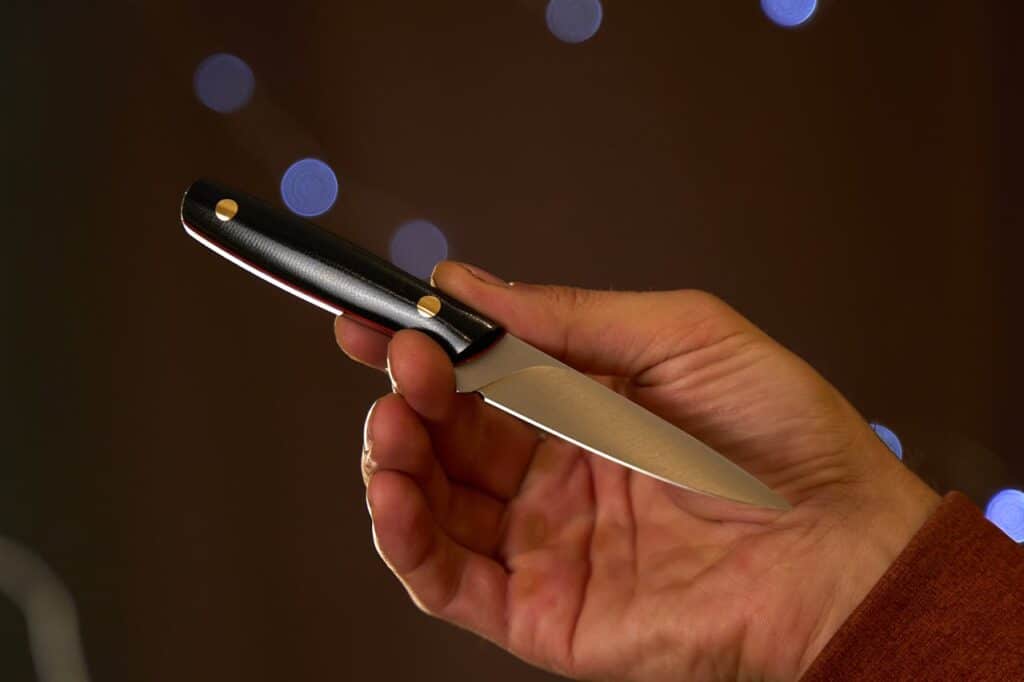
It consists of a single piece of steel from the blade tip to the butt and it’ll have the same width, thickness and length. It is strongest tang among all tangs due to a single construction. The entire tang will be visible to the eyes.
For hunting and cooking, I always go with full tang knives because I need to perform heavy duty tasks from skinning a big game to processing raw meat in the kitchen and these tasks require a solid single piece blade.
Pros:
- Suitable to perform powerful tasks.
- Single piece construction provides the extra strength.
- It is highly-durable.
- Easy to maintain.
Cons:
- It might be relatively heavy.
- It may be expensive compared to hidden tangs.
- The handle aesthetics are simple.
Many of my knives are full tang and one of my favorite models is the KA-BAR Becker BK2, primarily for hunting.
Let’s take a look at its specifications.
- Steel: Carbon Steel
- Blade Length: 5.25-inch
- Blade Thickness: 1/4 inch
- Handle material: Zytel
- Weight: 1 LBS
- Tang: Full tang
- Blade Type: Drop point
This model costs about $110 and is slightly more expensive than hidden tang knives. However, I invested in this one a few years back and am still using it every few months.
I use this knife for hunting, bushcraft or any other outdoor activities that require a powerful knife.
For cooking, I use like Shun Classic with the same tang and it’s been in collection for over a decade now.
What is a hidden tang?
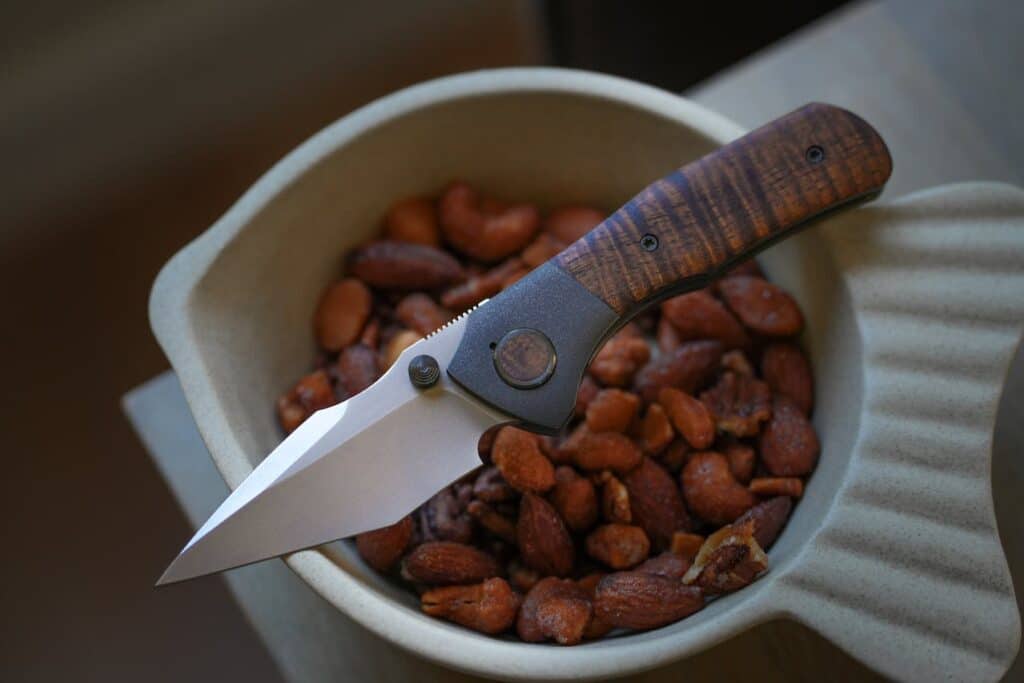
It extends only a partway of the handle. It’ll be thinner, narrower and shorter than a full tang blade.
It requires less steel and weigh at least 10-20% less than a full tang. The handle are mostly made from the woods that provide excellent grip.
There is a bit of misconception that a hidden tang knife isn’t very effective because it doesn’t extend till the end. I own multiple hidden tang knives and I can confidently say that it isn’t entirely true.
A hidden tang is capable of performing most tasks such as opening boxes, cutting & slicing food, carving, food preparation etc but you can’t do heavy-duty tasks such as batoning, butching, thrusting, game processing etc.
As the tang is hidden, manufacturers provide aesthetic handles that make the knife attractive which is missing on a full tang knife.
I own multiple knives and used them for various purposes; from kitchen work to everyday tasks like opening packages, cutting ropes, removing unwanted saplings etc and had no problem with them. I bring a hidden tang blade when I go hunting to perform lightweight activities such as skinning, caping, field dressing but I carry full tangs to perform heavy-duty tasks.
Pros:
- Most knives are lightweight.
- Flexible to operate due to reduced weight.
- Suitable for less demanding and everyday tasks.
- Affordable pricing.
- It comes with aesthetic handles.
Cons:
- The blade can’t handle stress from heavy-duty tasks.
- Less durable.
- Not easy to repair.
One of my favorite models is Helle Temagami I use for hunting.
Specifications:
- Steel: Stainless Steel
- Blade Length: 4.5 inches
- Handle material: Birch wood
- Weight: 3 lbs
- Tang: Hidden tang
- Blade Type: V-grind
I’ve owned this knife for over 5 years and still use it whenever I go camping, hiking or trekking with my friends. It costs about $89 which is less than a full tang knife and many other models with this tang are usually cheaper.
For cooking, I prefer my Messermeister Oliva Elite Stealth and I’ve using it for more than 5 years and I’m quite satisfied with its performance so far.
FAQs
1. What are the benefits of a full tang knife?
These knives are heavy and have high-strength which provides the right balance and control to perform heavy tasks. It can resist stress from most activities and may last longer.
2. What does it mean if a knife is full tang?
It means the knife is made out of a single piece of steel from the tip to the bottom of the handle. The tang will be visible through the entire handle.
3. Are hidden tang knives strong?
Yes, they are strong enough to perform daily activities, preparing foods, carving, slicing breads but may not be able to resist stress from powerful tasks like batoning, prying etc.
4. What are the disadvantages of a hidden tang?
These knives can’t resist stress from heavy tasks and may not be durable.
5. What is the difference between a full tang and a hidden tang?
A full tang is made out of a single piece of steel and will have the same thickness, width and extend till the bottom of the handle. A hidden one extends till a partway of the handle and will be thinner, short length and have less durability.
6. Can a full tang knife break?
Yes, it can break if you use it for the wrong purpose, put an excessive amount of stress or not maintain it regularly.
Get a clarity on your purpose
For me, both hidden and full tang knives matter because I need the full one to perform demanding tasks for cooking and hunting whereas the hidden one helps me while doing household chores like opening delivery packages, gardening, cutting wires etc.
If you need a knife to perform demanding tasks, you must go with the full tang or else, you will be just fine with a hidden tang. If you need any other help on this topic, please share it in the comments and I’ll talk to you soon. Thanks!