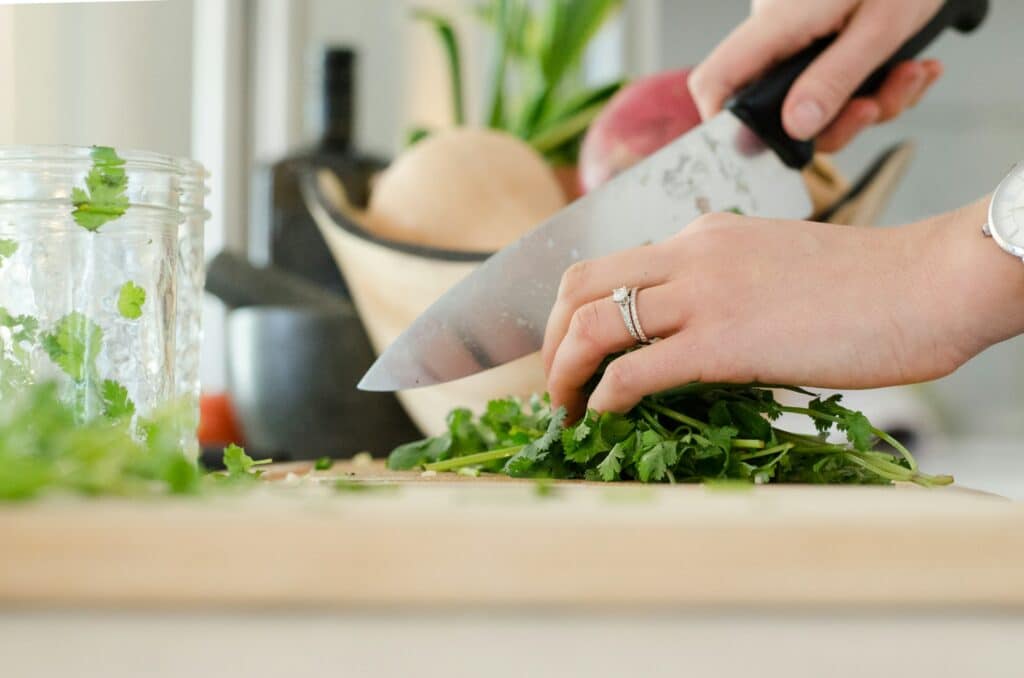
As a firefighter, I spend a lot of time in our station’s kitchen because I love cooking. The most important tool I need there is a “chef knife” and I use it for more than 80% of my tasks. I’m the one who is responsible for bringing these knives in the kitchen as I’m the only person in our team with the right knowledge of knives.
A couple of days back I was explaining to one of our team members how he can buy a similar knife for his home and during that process, I thought why not help others who are looking to buy it and here I am. In this post, I’ll explain the 8 factors I take into consideration before I decide chef knife.
Kitchen knives are categorized in two; Western knives, made in Germany & French & American manufacturers and the other one is, Japanese knives. It is crucial to know their major differences before you finalize the decision.
8 Things I Look Before I Finalize my Knife
1. Blade shape
Japanese chef knives are generally thinner, sharper and lighter. It is also known as “Gyuto”. These knives feature a straight edge which makes it ideal for tasks like chopping and dicing. However, the blades are brittle and may not be suitable for tougher surfaces like frozen foods or bones. In simple terms, you can’t cut anything harder than a raw potato with this knife.
Western knives will have a thicker blade with a big curved-belly. These blades are heavier than Japanese knives and known for their versatility. This workhorse can be used for various tasks from chopping and mincing to slicing a meat effortlessly.
2. Size
The most common size for a chef knife is 8-inches and it is good enough to perform most kitchen tasks such as cutting, slicing, mincing, chopping etc. If you are a home cook, it’ll be a perfect size for you.
The larger sizes are more versatile If you are a professional chef or a passionate cook like me. I cook at least twice per week in our fire station and also, make my own food in the home regularly. In both places, I prefer my Shun Premier 10″ Chef’s Knife.
3. Steel
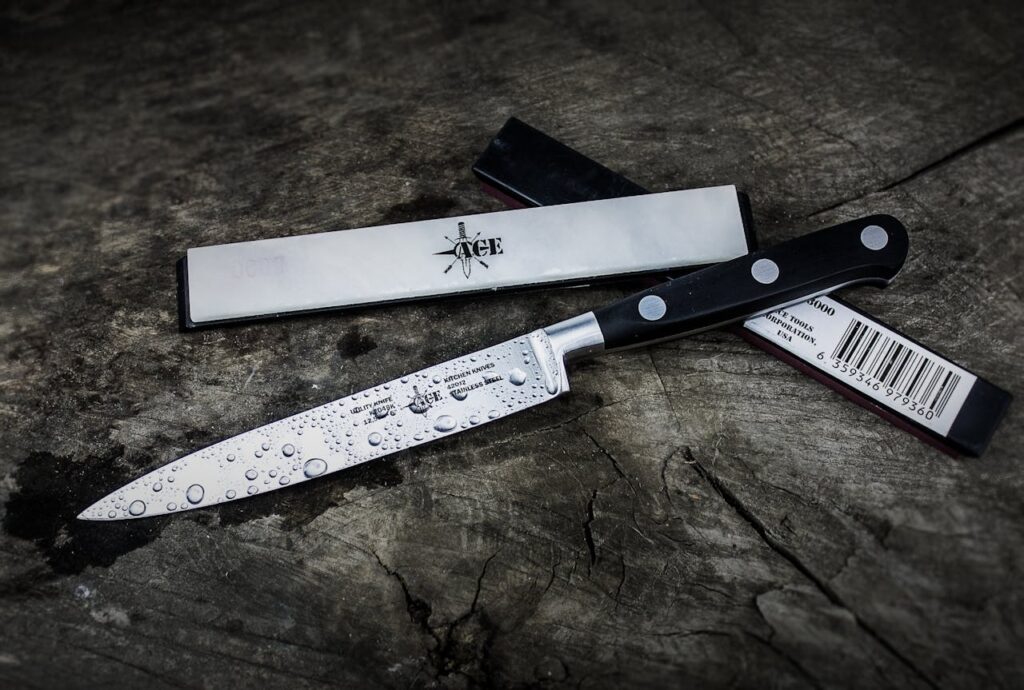
Selecting the right steel is crucial because it determines the performance of your knife. There are two main types of steel you’ll find in most kitchen knives; carbon steel and stainless steel.
Factors you need to consider:
1. Edge Retention & Sharpness:
Carbon steel is hard which results in better edge retention compared to a stainless one. It also has better sharpness and is suitable for delicate tasks and precise cutting.
2. Hardness:
The hardness of a steel is measured with HRC (Hardness Rockwell C). A decent kitchen knife should have at least 56 HRC. Anything lower than that, it’ll lose its sharpness quickly. A high carbon content steel increases the hardness level and is more likely to stay sharp for a longer time.
Japanese knives have an HRC of around 58-61 which offers sharp edges but requires more maintenance. For precise cutting and slicing, it is an excellent choice.
A stainless one will have 55-58 HRC, suitable for everyday kitchen tasks and requires minimal maintenance with slightly low sharpness.
3. Corrosion Resistance:
The composition of a carbon steel knife includes carbon and iron whereas the carbon content is about 0.5-2.1%. The stainless steel includes carbon, iron and at least 10.5% content of Chromium which doesn’t let the blades rust.
4. Ease of sharpening:
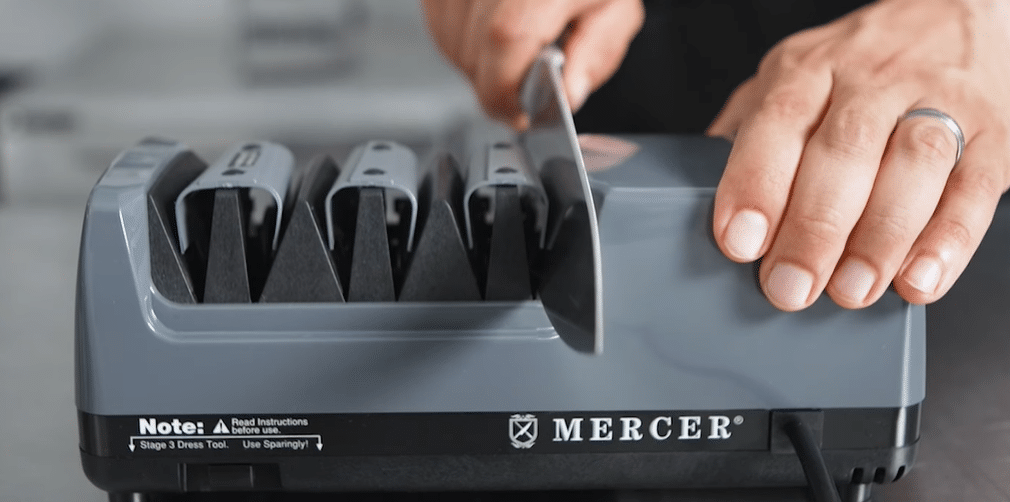
The lack of chromium in a carbon steel helps sharpening the blade easier compared to a stainless steel. It takes much more time to sharpen a stainless blade than a carbon steel.
Apart from the precise tasks, I mostly prefer stainless steel knives.
4. Forged vs. Stamped
A forged blade is made out of a single steel bar, heated by a craftsman or by a machine. An easy way to identify this knife is by a bolster. It features a large bolster in the center of the blade and it’ll have a full tang for a well-balanced and durable knife. These knives are a bit heavy compared to a stamped knife.
They are relatively more expensive than a stamped knife but it can last for a long time If it is maintained properly. One of my favorite knife is, WÜSTHOF Classic. I’ve been using for a long time and it gives a pure-confidence while cutting or slicing anything.
A stamped knife is built by cutting out a large sheet of steel. It is then honed, heat-treated for better durability. These knives don’t come with bolster and feature a full tang or partial tang depending upon the model. My Victorinox Fibrox is made using this process and it is lighter and affordable due the different process of manufacturing
5. Handle
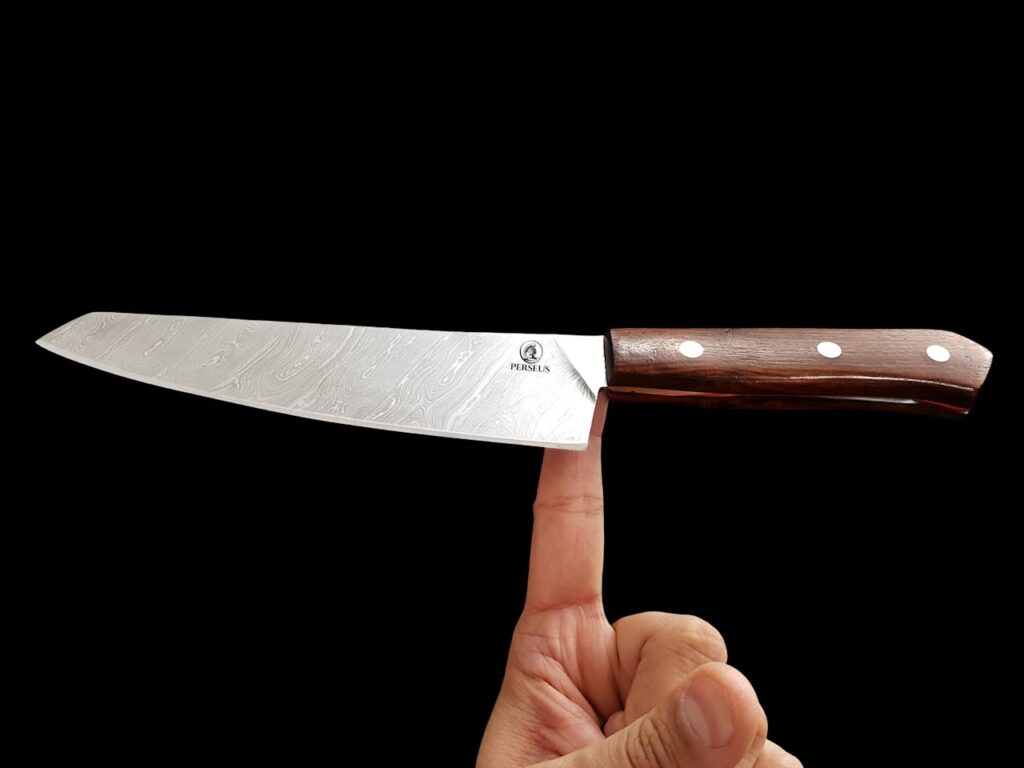
Japanese chef knives generally come with rounded, oval or octagonal-shaped handles with hidden tangs made out of wood. The blades through a partway of the handle which makes the whole profile lightweight and easier to hold. You can replace these handles if you ever have any issues with it.
The western knives feature a full tang blade, meaning it runs through the entire handle. This extra piece of metal adds weight to the knife however, it gives much more confidence while holding because of the balance and weight distribution. These handles are fixed through rivets which makes it harder to replace it.
Both handles are good but it comes down to personal preferences. If you are a professional chef, western handles will give you more confidence due to its balanced profile. If you are a homecook, Japanese handles would be just fine.
6. Are you left- handed or right handed?
If your dominant is right, you’ll have no issues using a single bevel knife. It is an angled surface leading to the blade’s cutting edge. If you are a left-handed person, always go with a double-edge bevel, as they are sharpened on both edges of the blade and comfortable to use.
7. Brand
The brand of your chef knife determines its reliability, strength and durability. I’ve always opted for reliable brands and their knives have lasted at least a few years. Some of them I still own and use after a decade.
Here are some of my personal recommendations:
- Zwilling.
- J.A. Henckels.
- Wusthof.
- Misen.
- Messermeister.
- Imarku.
- Global.
- MAC.
- Shun.
- Cangshan.
8. Price
As a homecook, spending about $100 for a chef knife from a reputable brand is good enough to last for at least 10 years or more If maintained properly. If you want premium knives with high-quality steels, handles etc, you can spend around $200 and it is a worthy investment for your kitchen.
If you want more info on selecting the right knife, I suggest you watch this video.
FAQs
1. How to pick the right chef knife?
First, you need to identify the purpose; If you are getting it as a professional chef or a home cook. Next, you need to choose the right steel, size, bevel and the brand that matches your needs.
2. Is a 6 inch or 8-inch chef knife better?
The 6-inch knife is adequate to perform small tasks like deboning chicken, coring tomatoes, wedging cheeses whereas 8-inch knives is an all-rounder that can pretty much do anything and it is the preferred size for most chefs.
3. Are Japanese or German knives better?
Japanese knives excel in precision tasks as they are lighter, thinner and sharper with a straight blade. The German ones are bulker, thicker and it can handle any abuse you put on it. You need to pick the one that suits you the most.
4. What are the three essential knives for a chef?
The most important knives are:
- A chef knife: For all kinds of use from cutting vegetables to slicing meat.
- A paring knife: To perform detailed work or delicate cuts.
- A serrated blade: For slicing breads or soft crunchy foods.
5. Do chefs prefer stainless steel or carbon steel?
Professional chefs prefer carbon steel due to better edge retention, harness and exceptional sharpness. It excels in delicate work and is easy to sharpen.
6. What not to cut with a chef’s knife?
You shouldn’t cut frozen foods, ice, delivery packages, hard shells, stone, glasses, ceramic or granite counter tops.
7. Are expensive kitchen knives worth it?
If you are a passionate home cook or a professional chef, it is absolutely worth spending on an expensive knife. This investment could last a lifetime If maintained properly and could help you in many ways while cooking.
Conclusion:
Since the age of 10, I’ve helped my mom prepare food by cutting vegetables, fruits etc. I just started to learn how to hunt with various knives a year back. I couldn’t identify the difference between a hunting knife and chef knife for a couple months. My mom and dad explained their distinct features and that’s how I got a clear idea about a good chef idea.
I’ve created this post with over a decade of experience with this knife and I’m sure you may have learnt something new. If you have any other questions, please let me know and I’ll clear your doubts as soon as possible. Cheers!