When I tried to sharpen my serrated knife a few years back for the first time, I was struggling with it because I was doing it with a whetstone. I wasn’t aware that it is not the right tool for it.
I had to ask my mom and dad about it and they explained that we need a specialized tool to sharpen this blade. Since then, I’ve followed the process to sharpen my knife.
A lot of people don’t know the right way to sharpen a serrated blade and I’ll show you how you can do it in this post quickly.
Why serrated knives stay sharp longer?
It stays sharp for longer periods because the saw-like teeth spread across multiple points instead of a one flat edge. Even when you drop the knife accidentally, only the knife tips will get damaged.
The valleys between the points could still slice the food.
When To Sharpen a Serrated Knife?
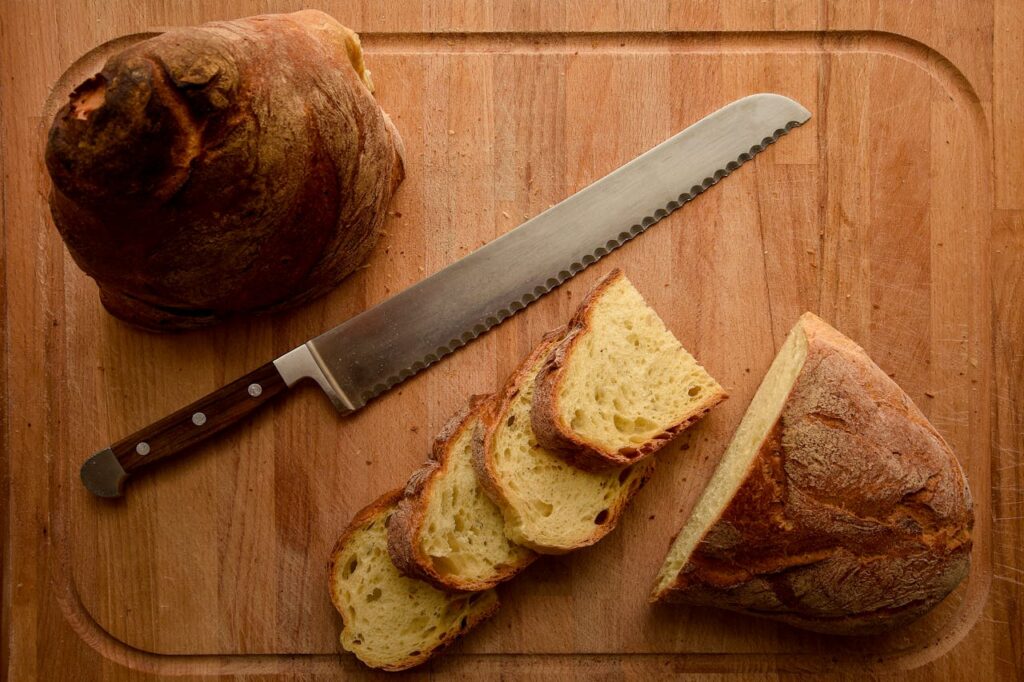
The interval for sharpening the knife depends on the tasks you do with it and how often you use it.
If you are only using it to slice bread like breadsticks, you can sharpen it after a prolonged duration like a year or two, however, If you are slicing Sourdough, you have to sharpen it at least once in a few months. As I use this knife to slice sourdough, I have to sharpen it quite often.
When you get lots of crumbs while slicing a bread, it is a clear sign that the serrated blade may need to be sharpened. If you have difficulty cutting the bread and need more pressure than usual, this is also another indication.
If you can cut tomatoes without crushing the flesh, it means the blade is sharp. However, if the tomatoes get crushed while cutting, you need to sharpen the knife.
Things You Need to Sharpen The Knife
1. Diamond or Ceramic Rod
To sharpen a serrated blade, always go with diamond or ceramic tapered rods. Try to ignore metal honing steel because it doesn’t take away much material required to sharpen a knife.
A diamond sharpening rod comes with an electrostatic-plated coating that helps to remove more materials than any other abrasive. A 600-grit diamond rod is good enough to get back the previous sharpness of the knife. I own a diamond sharpening rod by Wiitek and it gets the job done for me.
You can also use a ceramic coating rod for regular maintenance of the knife. It’ll help remove minimal material from the blade while refining the edge of the blade. I’ve a Messermeister ceramic sharpening rod and I use it mostly to sharpen my hunting knives but you can use it for serrated blades as well.
In case you aren’t sure whether to go with a diamond or ceramic rod, just do one thing. If you are getting lots of crumbs while slicing a bread, always go with the diamond one. If not, the ceramic rod would be just fine.
2. Time
Sharpening a serrated knife isn’t as simple as doing it on a flat blade knife. You’ll have to take care of each serration separately and it’ll take some time. Make sure you do it when you have some free time, like on weekends or any holidays just like me.
How Do You Sharpen a Serrated Knife?
Step 1: Identify the bevel side
The first thing you have to do is, determine the bevel side. Most serrated knives have a bevel edge (angled edge) on one side where the other one would be flat. You may not be able to identify it at a first glance but moving back and forth of it will give you a clear idea which one is the beveled one.
If you aren’t sure how to identify the bevel side, just watch this video.
Step 2: Move the rod back and forth in the gullets
Hold the knife in the cutting board in one hand and keep the sharpening rod on the other hand parallelly.
The space between two points (teeth) in a serrated knife are called gullets. You have to place the knife for sharpening rod in each gullet and then move it back and forth for 4-5 in the beveled edge of the knife. If your knife is extremely dull, you may need to do it more than that.
Step 3: Remove the burrs on the non-beveled side
Once you are done sharpening the beveled side, you’ll notice the burrs have formed on the non-beveled side and now, you have to slowly remove it by moving that side of the knife in the sharpening rod for 4-5 times. If some burrs are still there, doing it for a couple more times will remove it.
Tips to main a serrated knife sharpness
1. Use proper cutting techniques
In a straight blade, we use push-down-and-forward technique to cut foods or any other thing but If you want your serrated blade to last longer, you need to use the sawing motion.
Applying excessive pressure in a serrated knife would easily break the teeth and you’ll have to either sharpen it or buy a new one in the worst case.
2. Store them safely
To improve the lifespan of this knife, you must keep it in a knife block with slots designed for a serrated blade. This will prevent the blade from getting damaged. Do not put the serrate knife in a dishwasher because the harsh detergents and high heat will easily damage the knife blade.
I make sure that after each use, I place them back in my cabinet.
FAQs
1. Do you need a special sharpener for serrated knives?
Yes. Serrated blades require special tools like a diamond rod to sharpen them. Flat whetstone can’t reach the serrations.
2. Can you sharpen a serrated knife with a pull through sharpener?
Yes, you can, however, you would need a special tool like a diamond rod to reach the serrations to sharpen them.
3. Can an electric sharpener ruin serrations?
Yes. Continuously sharpening serrations with an electric sharpener may damage them.
Conclusion:
Serrated blades stay sharp for longer periods because the saw-like teeth spread across multiple points instead of a one flat edge. Still, you need to sharpen the knife once in a while to use it anytime you want without worrying about the sharpness.
Don’t be in a hurry while sharpening your serrated knife because you may end up damaging it instead of sharpening it. Look at your schedule and set a specific time to do this task.
In most cases, you can sharpen the serrated knife by yourself by following the steps. If you aren’t sure If you can do it, you can call a professional sharpener and he/she will help you out.