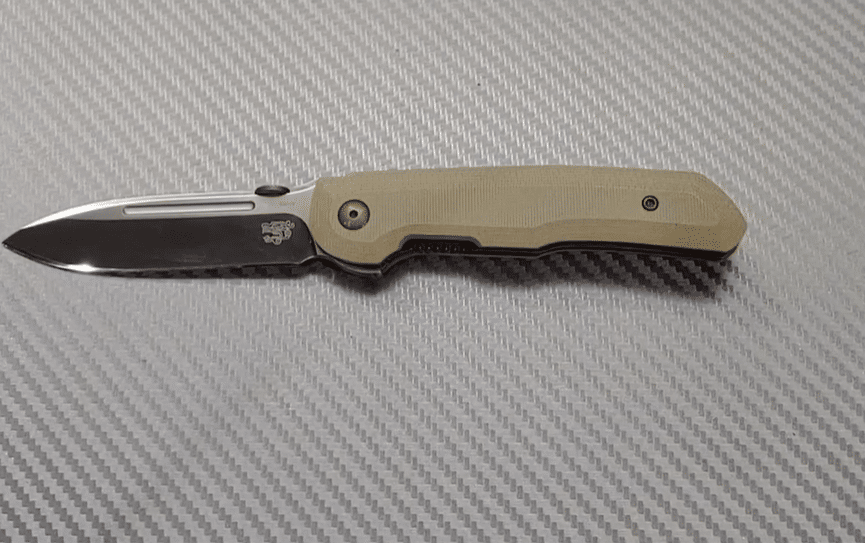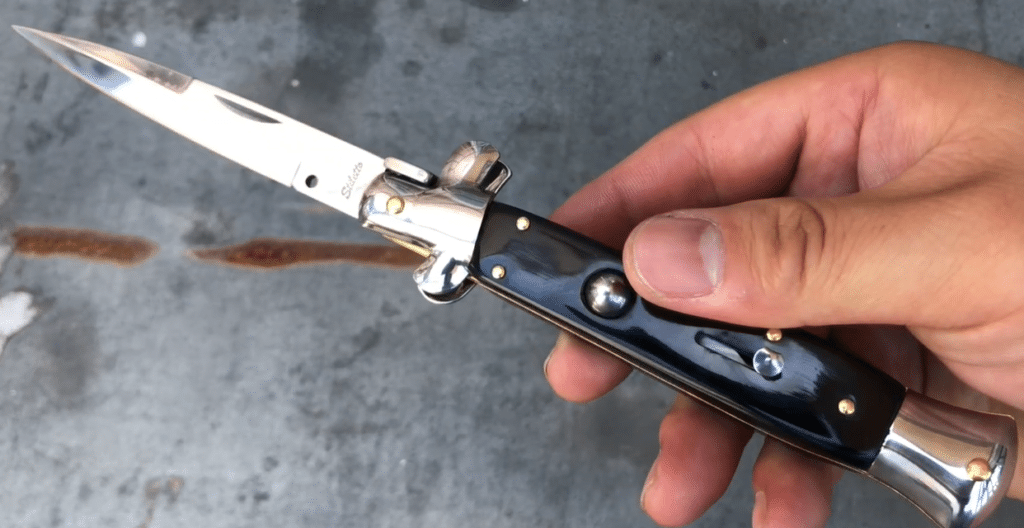
A few years back, I was renovating our home. I asked my brother to hand me a wharncliffe blade to cut some rope. He brought a sheepshoot but I was struggling to cut it until I noticed the blade shape. I can’t blame him either because both of these blades look similar and anyone can get confused.
I had to explain the differences between them and he brought me the right one after going through dozens of knives from my cabinet. Distinguishing their differences is important to perform any task with them and today, I would like to share the details in this post so that anyone can identify which knife might be suitable for them.
What is a sheepsfoot blade?
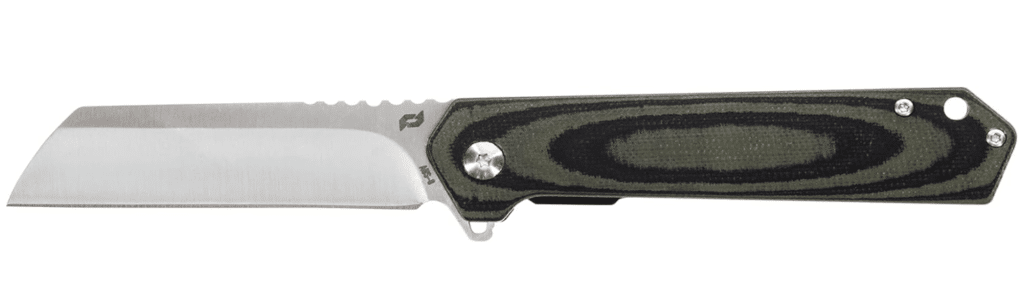
This blade features a flat & straight edge with minimal or no curves and it’ll have a thick spine through the blade which abruptly cuts at 45,60 or 90-degree to form a rounded tip.
The history and the origins of this blade is connected with farmers and sailors. The farmers used to cut sheep’s hoofs for their safety as the rounded and less aggressive tip ensured no harm to their animals. The sailors used to cut wet ropes and wanted to remove the pointed tip from other knives so that they wouldn’t accidentally stab someone.
The flat edge is suitable for cutting tasks but it isn’t the right choice for slicing tasks because of the lack of belly. Also, it makes it hard to cut anything on a flat surface because of the straight profile of the blade.
I have a couple of sheepsfoot blades and one of them I particularly like the most is; Kizer Sheepdog. It features a 3.9-inch blade with 14C28N steel.
Pros
1. Multi-purpose:
The blunt tip of this blade can be used for different tasks. I’ve used this knife for kitchen work, EDC tasks, firefighting, hunting etc.
2. Safety:
The rounded tip of the blade reduces the chances of accidentally puncturing themselves. As a firefighter, many of my knives feature this blade and haven’t injured myself with it even once.
3. Precise cutting:
The flat edge profile of the blade is suitable for making precise and controlled cuts.
4. Strength & Durability:
The blade’s profile distributes the strength evenly to perform any heavy-duty task that requires high pressure to cut a rough material.
5. Legality
It is legal to use and carry this blade in most parts of the country. However, it is advisable to check the legality before using it in your region.
6. Easy to sharpen
This blade is one of the easiest ones to sharpen because it doesn’t have a curve or belly and the straight edge makes the job effortless.
Cons
1. Lack of piercing ability
The round tip makes piercing a bit difficult and may not be suitable for stabbing.
2. Unfit for slicing
The straight edge doesn’t provide the comfort for slicing any material.
What is a wharncliffe blade?
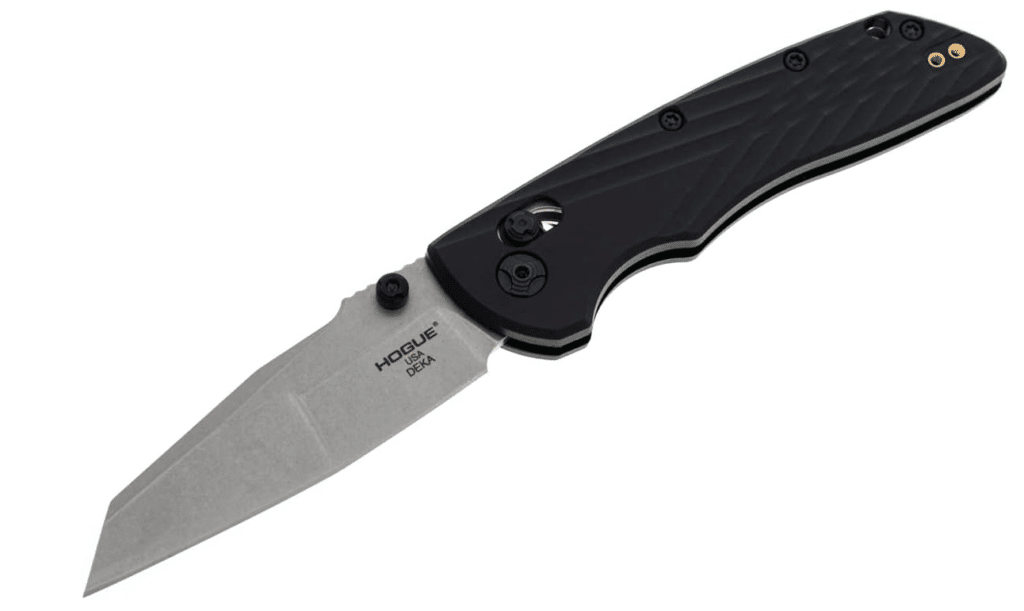
Wharncliffe features a similar blade profile to a sheepsfoot but the spine will be thinner and it tapers down to form a sharp point.
The blade was designed for a British lord named Wharncliffe in the 19th century who wanted a blade for precise cuts. Companies like Case Knives designed specialized blades based on this shape for the American market and many consumers and like it a lot.
The acute point of the blade is perfect for piercing through tough materials like cardboard; however, it is also prone to damage compared to a sharp tip of the sheepshoot.
One of my favorite blades is; Kershaw Leek. This budget-friendly knife comes with a 3-inch blade with stainless steel and is perfectly suitable for precise cuts.
Pros
1. The sharp tip
Unlike other blade shapes like drop point or clip point, the spine and the tip of a wharncliffe align directly which provides excellent strength and control to cut a box, rope or perform any EDC tasks.
2. Perfect for clean cuts
Whether it is a fruit, vegetable or a paper, the straight edge lets you do precise cuts easily.
3. Easy access
Without any curve or a belly, accessing the blade from the sheet is very quick & smooth.
Cons:
1. Fragile tip
While a sharp tip is perfect for precisely cutting anything, applying excessive pressure on it may break easily.
2. Not ideal for woodwork
This is a narrow blade shape that can concentrate only on a small surface and may not be able to perform tasks like batoning, chopping etc that require a wider surface.
FAQs
1. What is a Wharncliffe blade good for?
It can be used for EDC, bushcraft, hunting, self-defense and survival situations due to its acute point and the straight blade.
2. What is a sheepsfoot blade best for?
You can use this blade for whittling, firefighting, medical help, cut seat belts as its thick spine and the tip makes these tasks easier.
3. What is the difference between sheepsfoot and Wharncliffe?
Both of them have a straight blade but the spinal part of a sheepsfoot will be thicker and wider to form a rounded point whereas a Wharncliffe will have thinner spine for a sharp point.
Conclusion
I’ve used both blades for several years for various tasks. I like Wharncliffe as it is sustainable for my tasks like hunting and survival and I use them for outdoor tasks. For indoor tasks like EDC and lightweight kitchen work, I prefer the sheepsfoot. If you think I’ve missed any important point, do let me know in the comments below and I’ll add them for you. Cheers!