As a seasoned cook, I get a lot of questions about kitchen knives and a few days back, one of my colleagues brought a santoku knife featuring a hollow edge. He got it as a gift from someone and wanted to surprise me with this knife. I just smiled at him and said “I don’t use it” actually and then explained my reasons. I’ve used various knives for over a decade and I know it isn’t the right choice for cooking.
In this post, I would like to discuss this “unique blade shape” and clarify whether you actually need it.
What is a hollow edge knife?
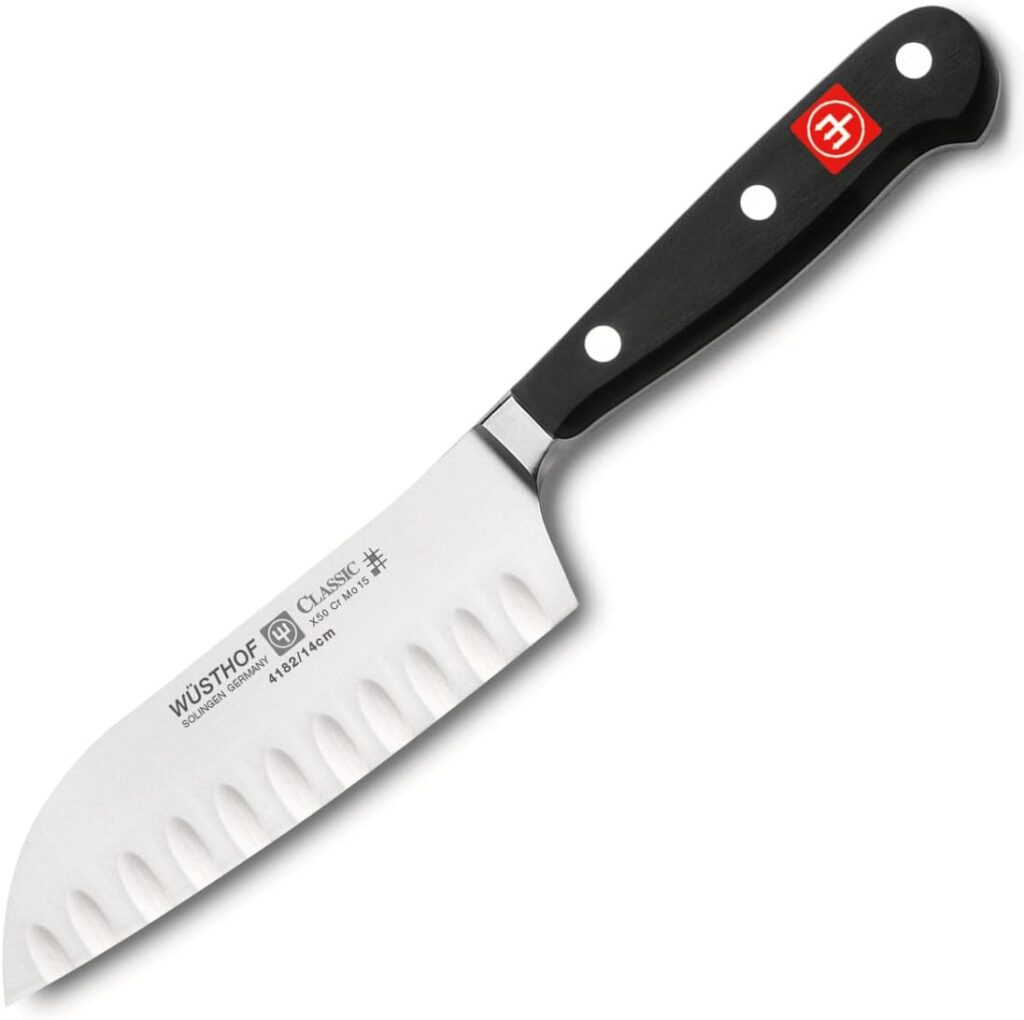
It is a type of blade that features a series of indentations which creates micro air bubbles and reduces the stickiness. This design helps the user cut foods smoothly in a large amount and they are common in santoku knives. It is also known as “Granton edge”.
This innovation was patented in 1928 by William Grant & Sons Ltd. Many popular brands such as WÜSTHOF, imarku, HENCKELS, etc offer kitchen knives with edge and people have mixed opinions on them.
As the hollow removes some metal on blades, it makes the knife lightweight and lets us do slicing, dicing and mincing easily for extended use. The blade shape is similar to a wide sheepsfoot with no tip at all and is very safe to use.
As a knife enthusiast I love to experiment with different knives and one of my friends suggested that I try this knife. I bought a couple of them and honestly, it left me disappointed.
I didn’t find these blades to be very useful because at that time I didn’t realize that it is the “knife grind” that makes the differences in food stickiness and not the edge.
I own WÜSTHOF Classic knives with a hollow edge and a flat edge. I find very minimal differences in their stickiness.
I used them to cut:
- Carrots.
- Potatoes.
- Onions.
- Cucumbers.
- Apple.
- Cheese.
- Tomatoes.
- Fatty meat.
- Fish.
Once I realized that these blades don’t help much in food stickiness despite creating the friction, I simply stopped using it for my day to day cooking and used my usual kitchen knives.
Which blade do I prefer instead?
For everyday kitchen work, I always prefer a chef knife with a plain edge. It is the workhorse of my kitchen due to its versatility.
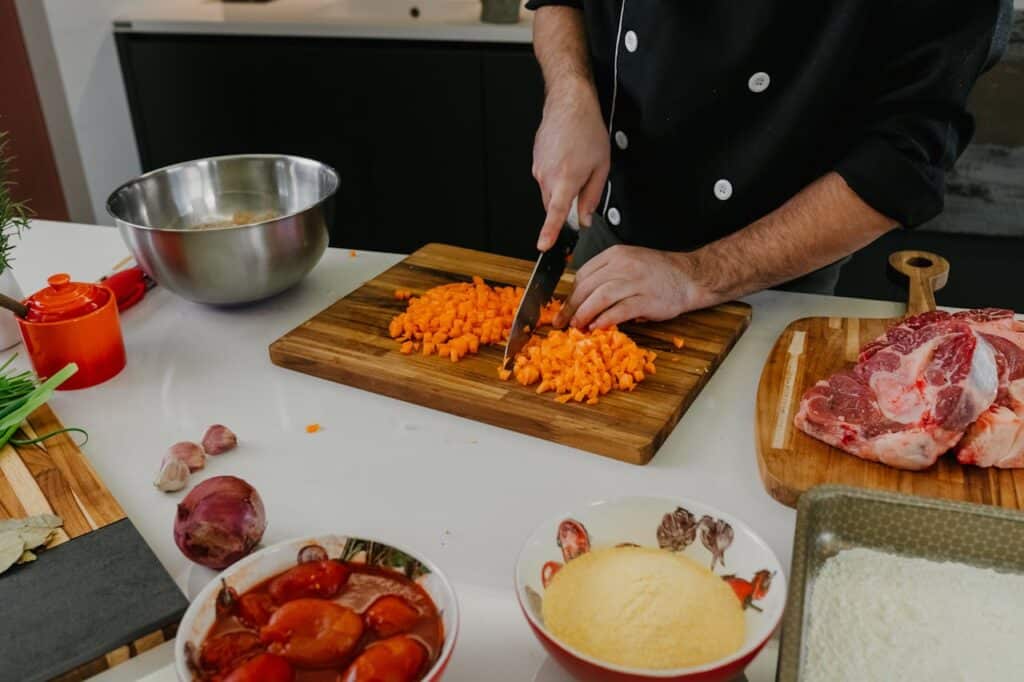
Here’s why I prefer it over hollow edge blades:
- They are mostly thick and heavy which makes it suitable for cutting or slicing both soft and hard ingredients.
- The curved edge of this blade is a great choice for rocking motion and it is one of the favorite techniques I regularly follow.
- For delicate cutting and slicing, this blade provides me excellent control.
- Sharpening the blade is very easy at a 15-degree angle with a whetstone.
Some of the top knives I use regularly are; WÜSTHOF Classic IKON 8-Inch Chef’s Knife, Victorinox Fibrox Pro Chef’s Knife and Global Knives 8″ Chef’s Knife. If you are looking for a long-term investment in a good kitchen knife, you won’t go wrong with any of them.
FAQs
1. What is the difference between straight and hollow edge knives?
A straight edge knife features a continuous, flat and plain edge. It is the most common kitchen knife blade suitable for various tasks like cutting or slicing fruits, vegetables, meats, mincing herbs, dicing etc.
A hollow edge features a similar blade however, the major difference on this one is, it’ll have indentations to create micro air bubbles to prevent the food stickiness in the blade. This edge will mostly be available on santoku knives.
2. What is a hollow edge knife used for?
It can be used to cut almost anything from soft fruit like a banana to raw meat; however, the main purpose of this edge is to prevent the food from sticking into the blades.
3. Can hollow edge knives be sharpened?
Yes, it can be sharpened however, due to indentations, you’ll need to be extra careful doing that. Repeated sharpening may require you to make the blade thinner. For the best results, hiring a professional service would be the right choice.
4. Which steak knife is better, serrated or straight?
Straight steak knives let you do precise cuts by keeping the juice intact; however, they need regular sharpening or honing for long-term use.
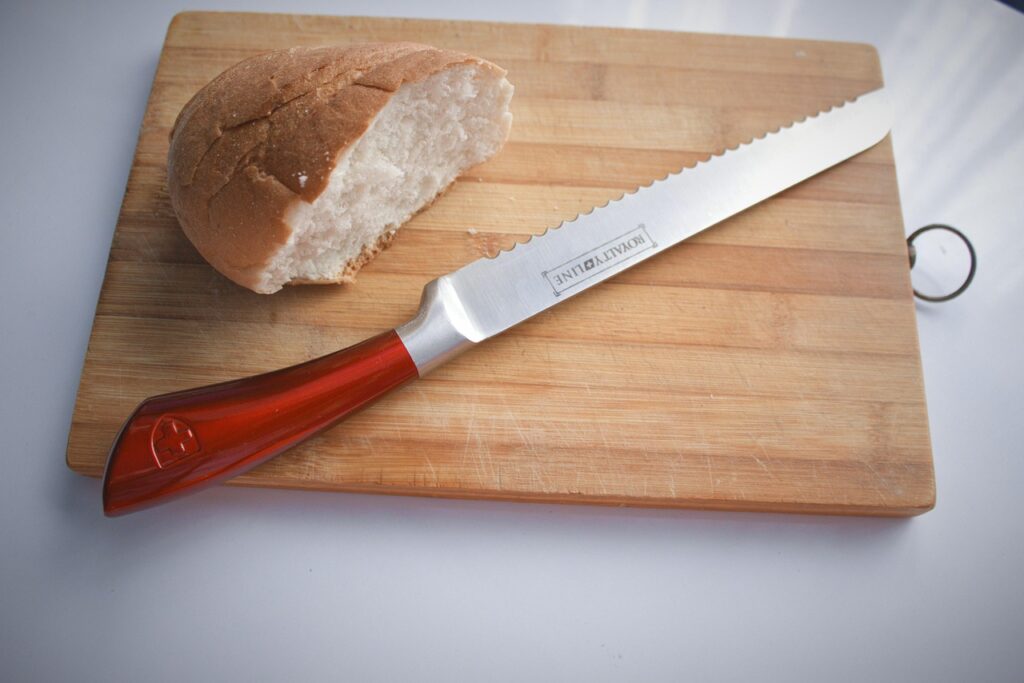
The serrated knives excel at cutting hard ingredients like bread and they aren’t great for steak because it tears apart the raw meat unevenly which isn’t ideal.
5. What is the most versatile knife type for the kitchen?
A chef knife is the most versatile knife. It can be used to make delicate cuts and to slice through any kind of soft or hard ingredient with ease. The most common size for a chef knife is between 6 to 8 inches.
6. What type of knife stays sharp longest?
Ceramic knives tend to stay sharp the longest compared to steel knives as it is made out of zirconium dioxide however, they are extremely brittle.
Do you actually need a hollow edge knife?
No. There is no need to have this knife in your knife because a regular chef knife with a plain edge has enough capability to do the same task as a hollow edge knife. All you need to do is, clean the knife after every use and you’ll have no issues while cutting or slicing anything with it.
If you have any other questions on this topic, do let me know in the comments and I’ll try to back to you shortly. Thank you!