Despite being a knife enthusiast and a passionate cook, I’ve limited ceramic knives in my collection and the reason is simple. The cons of these knives surpasses its pros and it serves very little purpose to me while cooking or using it for everyday use.
Even though I own a couple of them, I rarely use them. Many people at our fire station and hunting club have doubts whether to go with this knife or choose a steel one for an all-purpose knife and after using both of them for over a decade, I have an answer for you in this post.
What is a ceramic knife?
It is a knife made with zirconium dioxide rather than metal used in most knives. These knives have a higher HRC of about 70-75 then steel knives and have better edge retention. They don’t rust due to the lack of iron.
According to Wikipedia, It is the second most hard material, next to diamond which has Mohs scale of mineral hardness of 8.5 compared to 4.5 of the ceramic.
Kyocera is the brand that popularized the ceramic knives in the late 1980s and people loved the idea of long lasting edges. You don’t have to sharpen this blade regularly unlike steel knives. I saw this knife for the first time when I was visiting my mom’s friend and I asked my mom about it because she also didn’t have much in our home.
When I grew my interest in exploring various knives, I bought my first ceramic knife by Kyocera. I’ve used it for cutting fruits, vegetables and meats and I had mixed feelings about this knife because I loved some aspects of it and disliked some of them.
What I liked about this knife?
1. Edge Retention
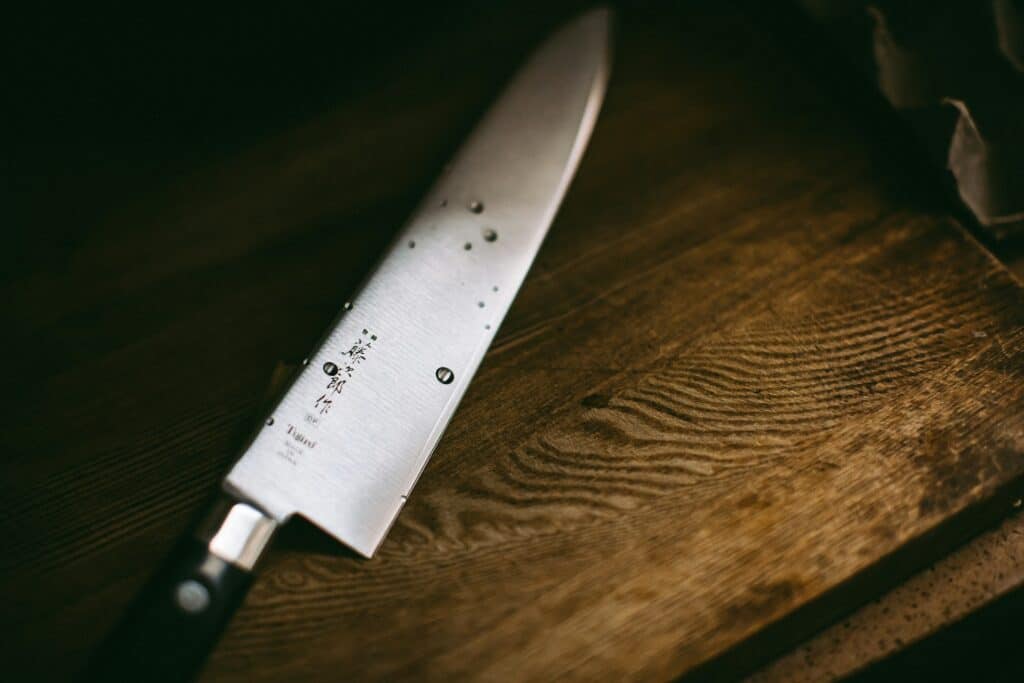
Steel knives are soft that require regular maintenance to hold their edge whereas ceramic knives blades are hard and hold the edge for a while.
I’ve a couple of ceramic knives I haven’t sharpened for years and still use them occasionally for cutting and slicing tasks and they work perfectly fine. Based on my experience, I can tell you that these knives can hold their edge at least 5 to 10 times more than steel knives.
2. Doesn’t rust
The main component in a steel is iron and If we don’t take care of knives made with it, they get rust. That’s not the case with ceramics. The main ingredient on this one is, is zirconium dioxide, also known as zirconia. They don’t oxidize and are corrosion resistant.
3. Lightweight:
Most ceramic knives are lightweight which means I don’t have to stress about the hand fatigue while using them. I’ve some of these knives for a couple hours and I couldn’t feel any stress or pain.
4. Less odors
Ceramic blades aren’t porous and don’t transfer the odor from one ingredient to another if we clean them properly. Once, I cut many spicy ingredients and immediately proceeded to cut a cake, but I couldn’t find any odor in the blades.
5. Price
You can get an affordable knife for as low as $20 on Amazon right now that offers most qualities such as better edge retention, good sharpness, less odours and lightweight profile. For premium models, you have to spend a little extra.
What I didn’t like about them?
1. Brittleness
Ceramics are extremely brittle and they can’t be used to cut hard ingredients like frozen foods, bones or any other food that can be sliced easily. It is the main reason I stay away from this knife because it gets chopped whenever I try to process such foods.
It is only useful for cutting soft ingredients that don’t require a lot of pressure. That’s why most chefs and cooks avoid this knife.
2. Limited Capability
Due to its brittleness, I don’t consider this as an all-rounder knife. As a cook, I’ve to prepare food both in my home and our fire station and I have to process multiple ingredients which include both soft and hard ones. I find it very difficult to use it as a primary knife in any kitchen due to the same reason. Like I mentioned earlier, I use only occasionally as a secondary knife or to process soft ingredients.
3. Hard to sharpen
Even though edges on these knives stay longer, sharpening them at home is a complex process. Many brands offer free sharpening services and some of them do it for a small fee. If they don’t offer any of these, you’ll have a hard time sharpening them on your own.
If you would like to know more about ceramic knives, I suggest you watch this.
FAQs
1. Are ceramic coated knives worth it?
If you want a knife that stays sharp for a long period, doesn’t rust and can cut/ slice small to moderately hard ingredients, it may be suitable for you. However, you can’t ignore its brittleness and complex sharpening process which isn’t the case on any steel knives.
2. Which knife is better, ceramic or stainless steel?
Ceramic knives have better edge retention and are corrosion resistant. It can process only limited ingredients without getting chipped. The major disadvantages of these knives are performance, brittleness and sharpening process.
Ceramic knives have better edge retention and are corrosion resistant however, you have to trade these qualities for performance due to its brittleness and sharpening process due to a different material.
Stainless steel is a versatile option that can process any kind of ingredient, is easy to sharpen however, it isn’t rust resistant If not taken care of properly.
3. What not to cut with a ceramic knife?
You can’t cut frozen foods, bones, squash, watermelon, pineapple or any other dense foods as the blades may get chipped or even break in some cases.
4. How long do ceramic knives last?
If you use it only for light cutting and slicing, it can easily last for a decade.
5. Why are ceramic knives not popular?
Due to its brittleness, these knives aren’t popular and aren’t a preferred choice for kitchen tasks.