In my initual days of hunting, I have sharpened a couple of carbon steel knives that I learnt from my dad and when I tried to do the same on a stainless steel one, I was struggling with it because I wasn’t aware that it isn’t as easy as I thought.
I asked about it to my dad and explained me that stainless steeel is different than the cabon one and you need a differetn approach to sharpen them. He explained me the process and since then, I haven’t faced any issues.
In this post, I’ll discuss how you can follow the same process and sharpen your stainless steel knives.
Before we move ahead, I would like to discuss some basic things.
How is this steel different from carbon steel?
The major differences are:
1. Corrosion and wear resistance: The stainless steel contains at least 10.5% chromium which makes a very thin oxide layer on the steel’s surface for corrosion and wear resistance. Carbon steel contains less chromium and it easily gets rust and has poor wear-resistance.
2. Less maintenance: Due to the high chromium element, it prevents corrosion and requires very minimal maintenance. Carbon steel may rust some after using it a couple of times but once you clean it, it can hold the edge very well.
3. Poor response to sharpening stone: Though the stainless has good wear resistance but due to this very quality, it doesn’t respond well to regular sharpening stones like oil or water.
1. Sharpen a stainless knife with Diamond stones
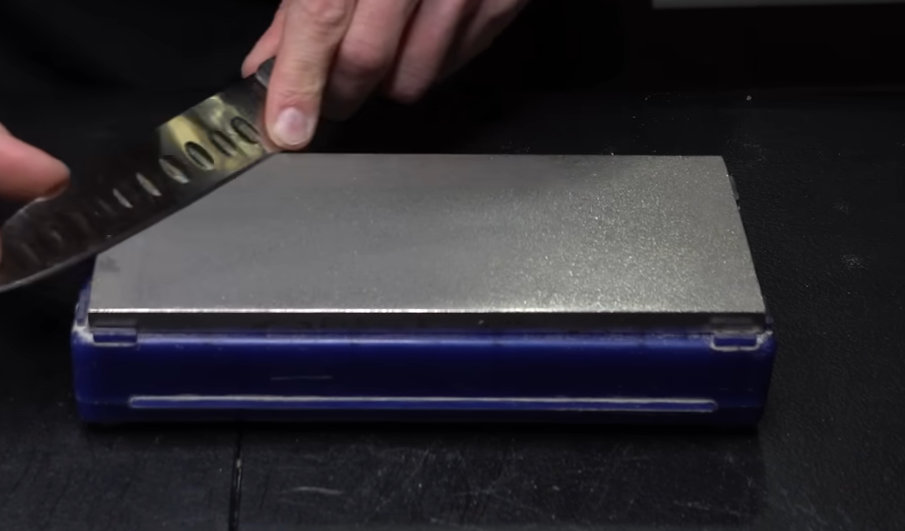
There is no better abrasive than a diamond stone to sharpen as it is a very hard material compared to others. It is my go-to option to sharpen a stainless steel knives that I use regularly.
A good diamond stone will cost you anywhere between $50 and $100. I know they are slightly more expensive than traditional whetstones but to efficiently sharpen this knife, you’ll have to spend a little extra.
I have a lot of such stones but my personal budget-friendly model is, SHARPAL 162N. It comes with dual grits; Coarse 325 grit and Extra fine 1200 grit which delivers excellent results.
Step 1: Place the diamond stone on a flat surface preferably a kitchen table, clear it and have a good room move freely.
Step 2: Clean the knife and diamond stone with a microfiber cloth.
Step 3: There will be two sides in each diamond stone; a coarse and a fine side. First, you’ll need to sharpen the knife on the coarse side and then move to the fine one.
Step 4: Flip the knife on the coarse side of the stone and set your knife at a 20-degree angle. If you don’t know how to set this angle in your knife, please watch this video and you’ll get the idea.
Step 5: Now, lock your wrist and gently draw the knife from the heel to the tip of the blade and follow the same approach on the other side of the blade.
Step 6: Repeat this process for 5-6 times each side of the blade and ensure you have got a burr.
Step 7: If the burr is visible, again repeat the same steps for 3-4 times to remove the burr.
Step 8: Move on to the fine side of the stone and draw the knife at least 5 times on each side of the blade to polish the blade.
2. Sharpen a stainless steel with a Sharpening System
When some of my knives go used for a long time or If some of my regularly used ones are getting chipped noticeably, I use a sharpen system to get back the sharpness. It is an excellent tool to sharpen any knife.
I own a Lansky Professional System to sharpen my knives and I’ll take this model as an example to explain the steps. The steps in other models may slightly vary.
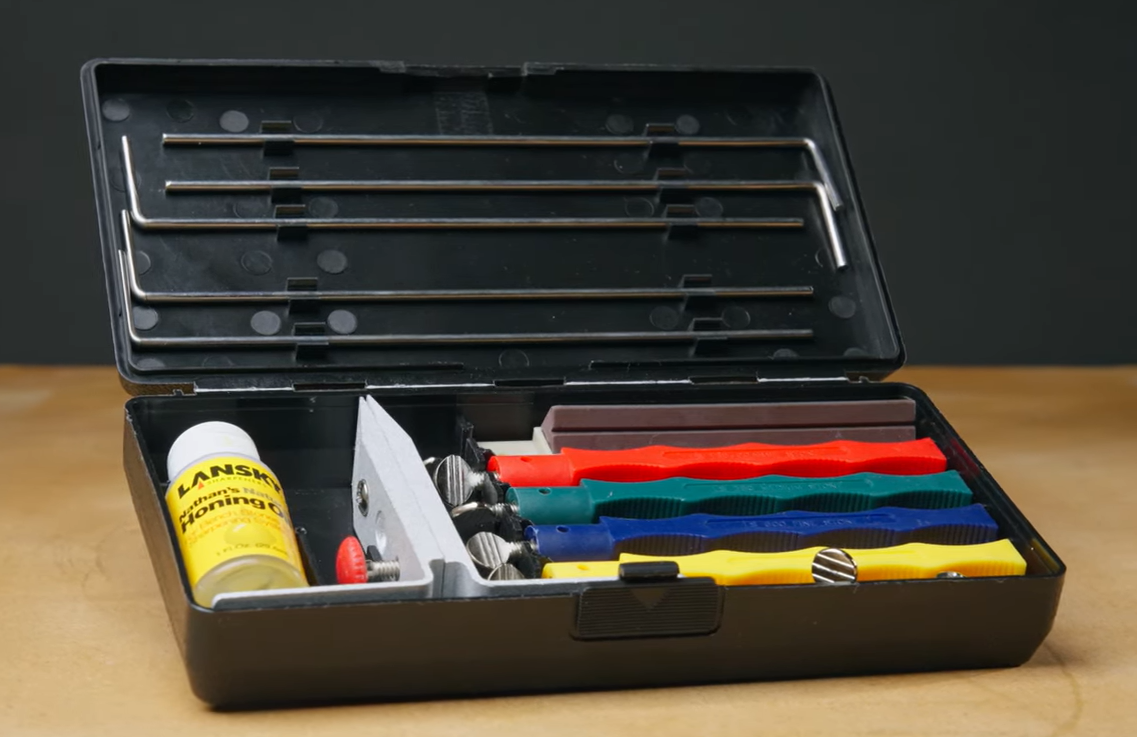
These are the things you’ll get with this sharpening system:
1. A multi-angle clamp to hold the blade safely.
2. Guide rods to maintain the sharpening angles consistently.
3. Five sharpening hones; coarse red hone (for dull blades), medium green hones (for standard sharpening), fine blue hone (for touchups and polishing), ultra fine yellow hone (for final polishing), serrated medium hone (for serrated knives).
4. Honing oil to keep the stone work effectively.
Step 1: Secure the knife in the clamp. Place the knife in the center If the knife is under 7 inches. If it is longer than that, work on each section of the knife separately.
Step 2: Attach the guide rod based on the knife’s condition. If it’s very dull, start with the coarse red hone and then move on to the next ones and at last finish with the ultra fine or fine blue hone.
Step 3: Select the angle to sharpen the knife. For effective results, I would recommend you go with a 20-degree angle.
Step 4: Start sharpening the knife using the rod diagonally and use the same number of strokes on each side of the blade for a balanced edge.
You can also watch this video if you have any doubts regarding the steps I just discussed with you.
FAQs
1. Can stainless steel knife blades be sharpened?
Yes, you can sharpen it but you’ll need a different tool i.e a diamond stone or a guided system to do that.
2. Why are stainless steel knives hard to sharpen?
The knives contain more chromium and other elements which results in more cardies and it makes it difficult to sharpen.
3. Can you sharpen this steel with a stone?
Yes, you can sharpen it with a diamond stone.
4. How often should I sharpen this steel?
Sharpening it once every 2-3 months will keep the blade sharper to perform any task.
5. Do professional chefs use stainless steel knives?
Yes, many professionals use this knife due to better toughness and corrosion resistance.
6. How to maintain a stainless steel knife?
Try honing your knife before every use. Once you are done using it, make sure to clean the blade with a soft cloth and warm water. Dry it completely before storing it in your cabinet or stand.
Conclusion:
Due to the abrasive nature of the stainless steel, sharpening the knife may take some extra time but it’ll be worth it because of the sharpness, hardness and corrosion resistance it provides.
Just follow the right process with patience and you can get it done quickly. If you would like to add anything here or have any questions, please do let me know and I’ll talk to you soon. Cheers!