One fine day, I picked a knife from my dad’s collection and went hunting. I tried to perform my usual tasks like skinning, butchering etc but I wasn’t struggling to perform them. Turns out, I picked a knife with the wrong tang.
Since then, I learnt about different types of tangs and their uses. I still have many friends who don’t know about them and pick the wrong one. If you have any doubts about them, continue reading as I’m about to share the details.
What is a tang?
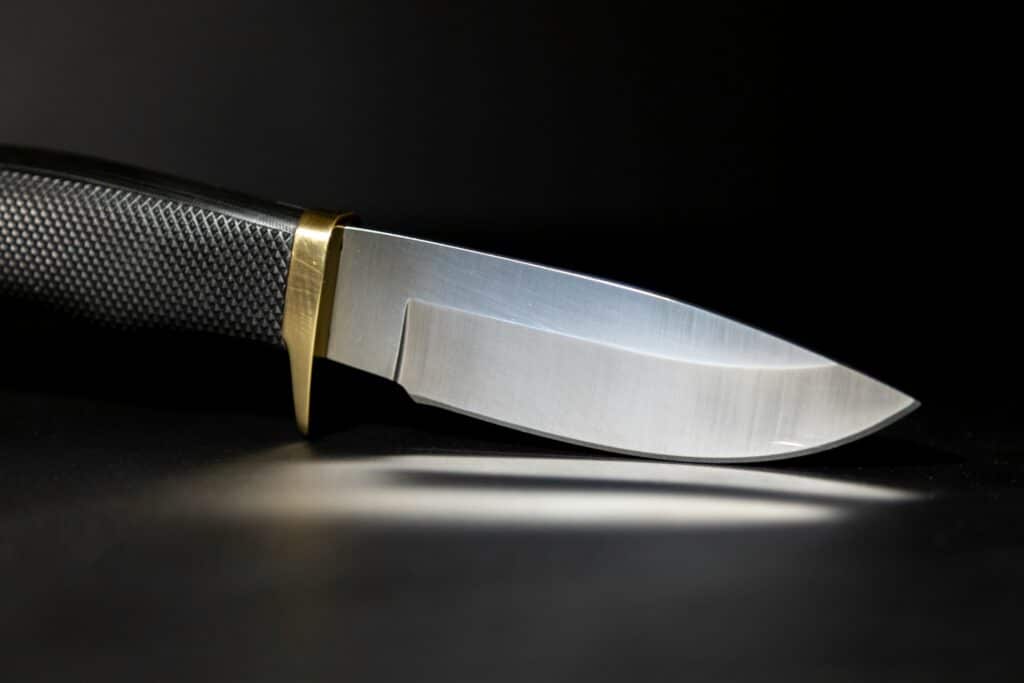
It is a part of a knife attached from the bottom of the blade till the butt. It is the unsharpened part and decides the strength and durability of a knife and they come in various shapes mainly; full tang and partial tangs.
What is a full tang?
It is a single piece of steel that goes from the blade tip to the bottom of the handle. The length and width of the steel will be the same and it’ll be visible on both sides of the knife. It is the strongest among other types and suitable to perform heavy-duty tasks due to its sturdy design.
As a hunter, I always choose a full tang knife as it helps me perform tasks like skinning, butchering, field dressing, cutting, slicing, wood batoning etc with ease.
If you need to perform outdoor activities like hunting, bushcraft etc, always go with a full tang for better performance and high durability. It is a bit expensive but is worth spending the money for the value it provides.
An example for a full tang knife is my KA-BAR Becker BK2. It is made of a single piece of high carbon steel and is highly-rated due to its sturdy build, durability and performance.
Not all full tangs are the same. There are some variations such as:
1. Hidden tang
It is completely hidden inside the handle and the width will be thinner than a full tang. Apart from the blade, the tang will most probably be made out of other materials for cost-cutting and to make the knife lightweight.
Identifying this knife at first glance is a bit difficult but once you hold it, you’ll know about it due to its balance and durability.
This tang weighs less than a full tang and you can perform many tasks with ease however, you’ll need to sacrifice some strength due to this.
Many manufacturers opt for this thing to build an aesthetic and appealing knife.
2. Skeletonized tang
This tang has cut outs in the metal to create a skeletonized shape in the handle and reduce the weight. It is stronger than a hidden one as the width of the tang stays the same and you’ll be able to perform lightweight to moderate tasks with it.
This is a favorite among outdoorsmen, survivalists, hunters and hikers. I own a couple of knives with this tang and my favorite is, ESEE Izula.
3. Encapsulated Tang
The encapsulated tang is similar to the hidden tang but the major difference is; the width of the tang stays the same as the blade. Most parts of the blade are made out of metal and are suitable for lightweight tasks.
This tang is popular among knife enthusiasts to add them in their collections and many brands opt this to provide luxury and custom knives.
4. Extended tang
This is a type of tang that extends beyond the handle. It’ll be clearly visible and will serve as a “knife butt”. The extended part of the knife can also be used as a “hammer pommel” to break any hard materials quickly. Due to the design, knives would be slightly heavy.
This is a very perfect option for hunting and survival tasks. I own LionSTEEL M4 with this tang and I use it once in a while.
What is a partial tang?
A partial tang only extends till the partway of the handle and doesn’t go to the entire handle like a full tang.
Partial tang knives are lightweight, portability and inexpensive. They are suitable to perform less-demanding tasks like delicately cutting food, cutting ropes/ boxes, EDC tasks etc.
These knives have some disadvantages such as:
1. They are not as durable due to the design.
2. You’ll have less balance and control.
3. Not suitable to perform heavy tasks like batoning, prying, wood carving, etc.
Even though I have some partial tang knives, I don’t carry them while hunting as it doesn’t have adequate strength to perform powerful tasks. I only carry some when we go camping, hiking or backpacking.
Similar to full tangs, there are some variations of partial tangs too.
1. Rat-Tail tang
As the name suggests, this partial tang runs through in the shape of a rat-tail till the base of the handle. Due to its design & shape, it is considered one of the weakest tang among others and suitable as it provides less balance and strength to perform any task.
Rat-tail tang knives are popular among Scandinavian knives like puukkos and Leuku knives. I own Helle Temagami and I love using it every few months for hunting and everyday tasks.
2. Tapered tang
This tang is similar to a full tang and it would have the same width and thickness in the base of the handle but narrows down quietly till the butt of the handle. Due to its design, a knife using this tang would be lightweight and will have good balance and strength.
3. Push tang
A push tang is inserted in the handle with different methods using; adhesive, pins, or friction fit. These knives are lightweight but they are robust and able to perform heavy-duty tasks easily.
FAQs
1. What is the tang on a knife?
A tang is the component attached to the knife’s handle for the right balance and the strength. It is one of the key parts that decides the longevity and the effectiveness of the knife.
2. Do Japanese knives have a full tang?
Most Japanese brands offer partial tang. Only a selected brand offers a full tang.
3. Why should a knife have a full tang?
A full tang provides great strength, balance and is durable compared to partial tang knives.
4. What are the disadvantages of full tang?
As the full tang runs through the entire handle with the same width, it will not offer portability. Also, they are more expensive than partial tangs.
5. Are santoku knives full tang?
Santoku knives come with both full tang and partial tangs to serve different sets of people.
Conclusion:
Whether you need a hunting knife, chef’s knife, survival knife or boning knife, you need to know about their tang. Option for the wrong one may not offer the right balance and maximum strength.
Many people ignore this hidden part of the knife and go to the wrong unknown unknowingly. Use this guide to clear the doubt about types of tangs in knives. If you have any questions on this topic, let me know about it in the comments and I’ll get back to you soon. Cheers!