I went to camp a few years back and one of my friends wanted to cut a branch out of curiosity to know about a tree but I noticed he forgot to carry a knife in his pocket. Just when I wanted to pass him my knife, he just pulled a knife from neck and cut the branch. That’s when I saw this knife for the first time.
I was a bit surprised and asked about it to my friend. He explained to me and shared its benefits. I wanted to get one for myself but I was bit scared due to position. After some time, I got one for myself and used it safely to perform various tasks in camping as well for hunting.
If you are curious to know about this knife, I’ll share it in this post.
What is a neck knife?
These knives are worn around the neck with a cord or chain to carry it. You can wear it outside your shirt to tuck it inside. These are usually fixed blades with a maximum of 4-inch blade and suitable for both outdoor and indoor purposes.
Are neck knives legal in the United States?
They are legal in most parts of the country with two guidelines. You must be at least 18 years of age and the blade length shouldn’t exceed 4-inches.
As I live in Alaska, I easily pass these two criteria’s. I suggest you check the local laws before you carry it.
Uses of a neck knife
1. Self-Defense
A neck knife is an excellent choice for self-defense as you can discreetly carry it outdoors and when you get attacked by anyone, you can just draw the knife and use it to defend yourself from the danger.
2. Surviving outdoors
If you get lost on a trekking trip, camping or backpacking, you can use the knife for food prep, build a shelter or carve distress signals. I’ve used this knife a couple of times when me and my friends went for a hiking and camping a few years back.
3. Professional use
Professionals such as crafters, artists, technicians, EMTs, tradespeople etc can benefit from carrying a neck knife as these people need to perform tasks with attention to detail and many people don’t like to carry a knife in their pockets during the work.
I have some friends in these professions and they use this knife regularly for their work.
4. Everyday use
With a knife around your neck, you can open the delivery packages, cutting ropes, or food preparations.
How to choose the right knife?
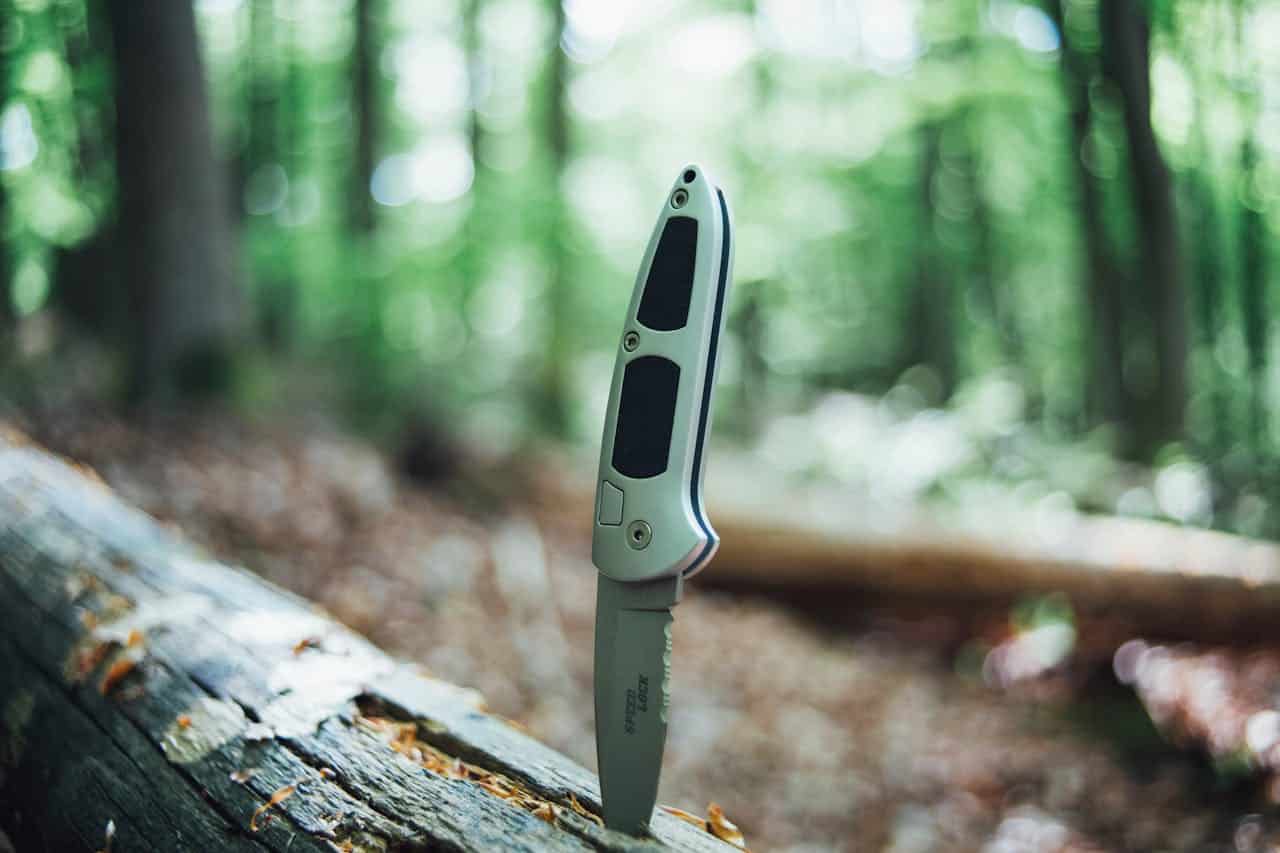
1. Steel & Build:
These should be the key factors while choosing a knife.
Most knives are equipped with stainless steel or high-carbon steel.
The stainless steel is rust resistant and suitable to use in an outdoor environment whereas the carbon steel one holds a sharper edge for a prolonged period.
Stainless steel contains a good amount of chromium (13%) and this property helps the steel to withhold during harsh conditions and water. It also has better edge retention and is suitable for both outdoor and indoor conditions. However, due to the high chromium element, sharpening it will take a long time.
The best options for stainless are; CPM-S35VN and 14C28N. They provide excellent sharpness, hardness and corrosion resistance and many manufacturers provide knives with this steel.
For outdoor activity knives like this one, I always prefer stainless steel due to to resistance to harsh weather.
Carbon steel is hard and sharp but due to low chromium, it won’t hold these properties in outdoor conditions. You need to sharpen it regularly for these qualities in your knives. The good news is, you can sharpen this steel quickly with just a whetstone.
For Carbon steel, try going with an option like 1095 or 440C as they have high corrosion resistance and are suitable for outdoor environments.
The thickness of the knife should be under 0.15 inches to carry it effortlessly and to perform any task easily.
Always look for a full-tang blade as it’ll give the maximum strength to perform any activity.
2. Blade Shape & Grind:
Flat and convex grind blades are perfect choices because both of them provide excellent sharpness and strength.
3. Handle Material & Design:
A good handle is essential to hold the knife comfortably and I would recommend you to go with synthetic materials like G10 or Micarta as they provide excellent grip and are durable.
4. Sheath & Carry System:
Always go with the Kydex sheath as it provides a level of durability and rigidity compared to other options. It provides a secure fit and it is easy to draw a knife on this one. It is also made to resist in harsh conditions which makes it a great option for survivalists and outdoor experts.
I prefer only neck knife with a Kydex sheath or else I don’t get one.
5. Pricing
For an affordable model, you need to spend anywhere between $20-$50. These models would come with basic features and decent build-quality.
Mid-range models would cost about $50-$100 and they’ll be equipped with better build-quality, more features and high-durability. For premium models, you need to spend more than this and they’ll come with better ergonomics, secure carry systems, premium steels, recurved edge, better edge retention and corrosion resistance.
The top brands I recommend from my experience are: CRKT, ESEE, Ka-Bar, Cold Steel, Benchmade, Spyderco, Kizer, Civivi, Condor, Boker Gerber and WE Knife.
Some of my favorite models are Boker Magnum Lil Friend and CRKT S.P.E.W.
How to maintain a neck knife
1. Cleaning it regularly
To prevent the knife from getting rust, always clean the knife after each use. Using a damp cloth to clean both the handle and the blade is enough. Make sure to dry it completely before putting it back into the sheath. I follow this step before storing back to its place.
2. Sharpen the knife
To maintain the sharpness of the knife, it is crucial to sharpen it regularly. You can use whetstone or a specialized sharpener to keep the sharpness of the knife. I prefer whetsone for neck knife as it does a fine job getting back the sharpness and I do it every few months.
3. Store it safely
While not using the knife, keep it in a dry place because even the highest-grade steel could get bad If you place it in the wrong spot. I’ve a separate compartment to store these knives in my home.
FAQs
1. Is a neck knife illegal?
No, they are legal in many states in the U.S however, you must be at least 18 years of age and the blade must be under 4-inches.
2. What is a knife that goes around the neck?
These are called neck knives. They are fixed blade-knives that are worn around the neck using a cord or chain.
Conclusion:
A neck knife is a decent option for those who love to spend time outdoors and want to draw the knife in a convenient way. The fixed-blade knives could also be used as a back-up knife when surviving outdoors and they are mostly lightweight due to their compact size.
I have used it a couple of times and it helped do tasks like cutting cord, ropes, food preparation, slicing etc. If you have any questions on the topic, do let me know in the comments and I’ll get back to you shortly. Cheers!