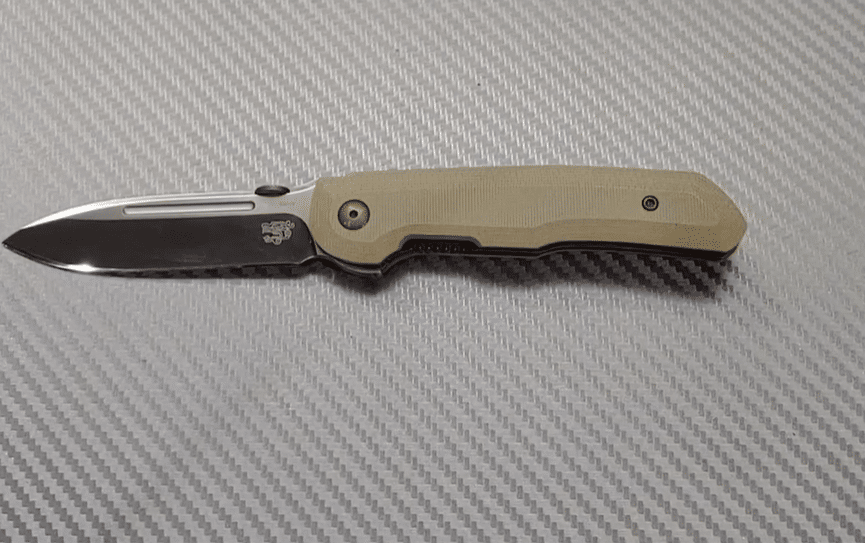
I’m used to traditional sharpeners because they are cheap and pretty straightforward to use however, many of my friends recommended me that I try an electric sharper at least once because they thought it saves their time and eventually I got my first electric knife sharpener a decade back in 2015 after a lot of hesitancy.
The model I opted for was Chef’sChoice and to be honest, I wasn’t sure how to use it and had to read the manual to understand how it works. After a while, I understood the process and I’ve been using this machine for over a decade now. If you are planning to get an electric knife, use this post as your guide.
Before that, I would like to share differences between the two sharpeners.
Electric vs Manual knife sharpener
A manual sharpener gives you more control in angle and consistency however, If you aren’t a skilled user, you can use the electric one to use its fixed angle to sharpen the knife.
Even though the electric one has many advantages, it has some drawbacks as well.
- You can’t use electric sharpeners without electricity.
- An electric sharpener only works with specific knives. For example, my electric sharpener only works with American, European and Asian knives. It may not work on serrated blades with harder steel. There is no such restriction on traditional knife sharpeners.
Manual sharpeners are mostly portable and lightweight but the electric models are heavier because they contain a motor and other moving parts.
My electric sharpener weighs 5 lbs whereas a standard whetstone weighs 1.8 lbs.
How to use an electric sharpener?
I’ll take the example of my electric sharpener (15XV) to explain the steps. Options in other models may slightly vary.
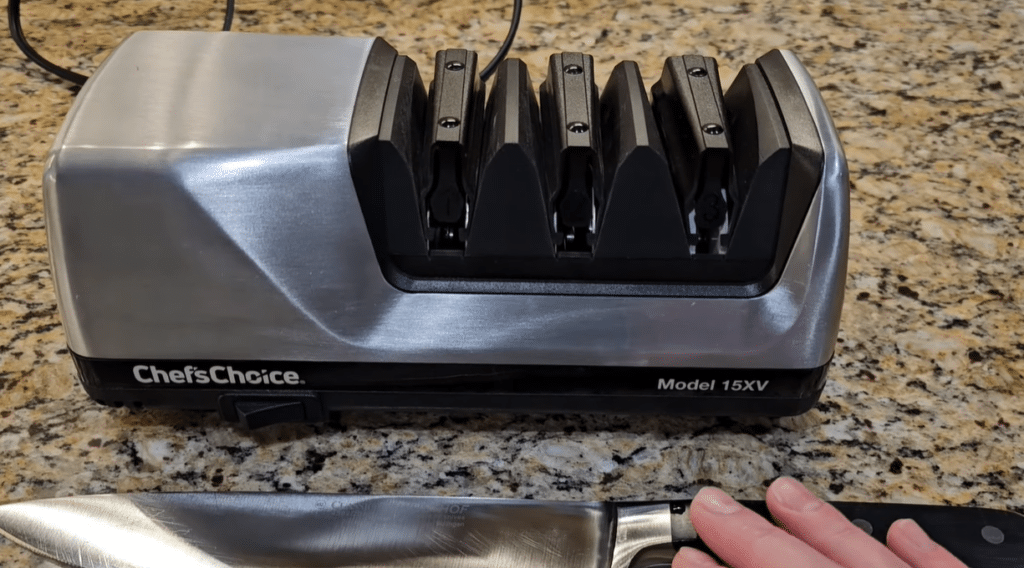
Step 1: Plug in the device into the power socket and turn on the sharpener.
Step 2: Use the right slot to sharpen the knife.
There are 3 slots in the machine to use depending upon the knife’s condition.
Slot 1- This one improves the sharpness using the medium diamond abrasives at a 15-degree angle. This is useful if your knife is very dull.
Slot 2- You have the fine diamond abrasives on this one to hone the knife.
Slot 3- This slot is used to polish the knife and remove the burr.
I’m assuming you are a newbie and would recommend starting sharpening and honing your knife with the first two slots.
You need to start sharpening the knife from the left side and then, move on to the right side. For an 8-inch knife, it’ll take you about 5-6 seconds for a single pull. Maintain the same pace for both sides and swipe the knife 4 times per side in each slot.
Step 3: You may have got a burr on either side of the blade by following the above step and you’ll need to remove it in the third slot. To find out which side of the blade has a burr, put your finger on both sides of the blade and whichever doesn’t feel smooth or flat, there will be a burr.
Removing the burr is essential to achieve the razor sharp edge and swiping it in this slot for 2-3 would do the job.
Watch this video if you have any doubts about these steps.
How to take care of an electric sharpener?
1. Clean the machine
Once you are done using the sharpener, simply use a soft cloth and clean the machine thoroughly and ensure there is no dust or particles on it.
2. Remove the metal dust
Many models have a separate built-in compartment that collects the dust and can be removed manually.
Not every sharpener has this but the model I own is equipped with this feature and can be accessed by flipping the machine. I just have to open the plastic from there and remove the dust with a cloth. Once done, place the plastic back on the machine.
This quick video explains the process I’m talking about.
Contact the manufacturer if you have any doubt about this compartment.
Things to know before using an electric knife sharpener
- Use a serrated knife only in specific slots mentioned in the manual.
- Do not put water or any other liquid in an electric knife sharpener because there is a high probability of getting an electrical shock.
- Don’t use an electric sharpener with a damaged cord. It is very dangerous. Instead, get it repaired from an authorized service center or replace it with a new one.
- Turn off the power socket or remove the plug when not in use or while cleaning it.
- Do not use the sharpener near kids or else they may get injured by placing their fingers or even hand in it.
Is an electric knife sharpener worth it?
If you have limited knowledge about sharpening and are willing to spend money to sharpen your knife with accurate angles, it is worth spending money.
FAQs
1. How much is an electric knife sharpener?
The basic models would cost anywhere between $60 to $90. You can sharpen everyday knives with them. The mid-range models cost $90-$180 and they are equipped with more features. For premium models, you’ll have to spend at least $180 and could go up to $300 or more.
Based on your requirement and the budget, you can go with the right model.
2. Are pull-through sharpeners bad for knives?
Yes. In most cases, it removes a good amount of metal unnecessarily and also reduces the durability of the knife.
3. Are electric knife sharpeners worth it?
If you want to quickly sharpen your knife without guessing the right angle, it is worth spending the money on it but there are a few disadvantages too.
It is not possible to set the electric sharpener at a precise angle like we are able to do in a whetstone. It removes more than traditional sharpeners during the process. It can also damage the knife if you don’t know the right way to use it.
4. Do electric knife sharpeners actually work?
Yes, they do. They help dull blades sharper quickly compared to a traditional one.
5. Do professional chefs use electric knife sharpeners?
Yes. Many professionals use this sharpener to save their time and start cooking as soon as possible.
Conclusion:
I use my electric sharpener when I’m a bit in a hurry and when I’m free, I use the traditional one.
Using an electric knife sharpener is easier than sharpening it with manual ones with limited skills. You don’t have to be a knife expert to use this machine. All you need is electricity and a flat surface.