As a firefighter and a hunter, I need to carry a survival knife to protect myself and I need to access quickly to save people’s lives. I have mastered the skill of carrying knives in various positions as I have been hunting since I was 8.
In this post, I’ll share the top 8 ways I carry this knife for different situations.
Before we move forward, check the local laws to see if you can legally carry a concealed knife.
Fixed-blade knives are better and popular for survival because they have fewer moving parts. Therefore, I’ll share methods to carry the fixed-blades in mind.
1. Horizontal Belt Carry
Also known as “Appendix Carry”
There are 3 ways to carry a knife with a sheath using the belt:
- By tipping it down outside the waistband.
- Tip up outside the waistband.
- Across the waist.
With this method, I can only carry a small to mid-sized knife (2-6 inches). I prefer this method when I’m skinning or butchering small games as it is an appropriate size to perform such tasks. I prefer to carry it across the waist for easy access.
You can pick either a leather or Kydex sheath to clip it into your belt, as both of them are highly reliable. There is a minimal chance of dropping a knife with this method.
2. Vertical Belt Carry
For blades larger than 6-inches, I prefer carrying the knife with sheath vertically. It is a popular method to access larger knives easily.
3. Boot Sheath
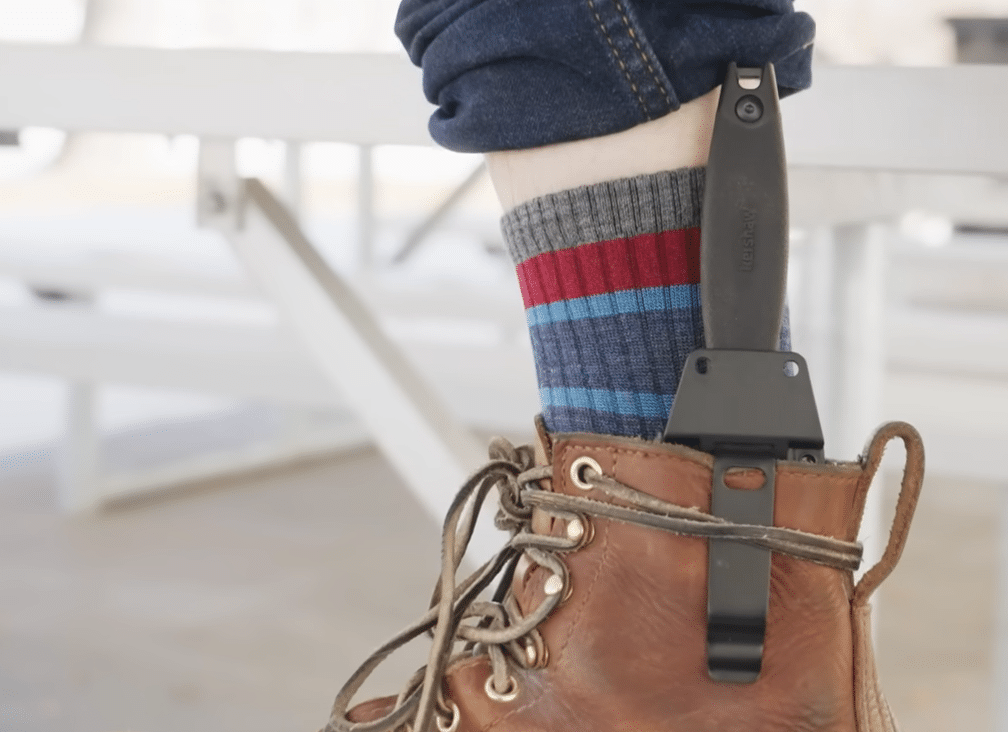
When I’m travelling to any isolated places for hunting, I prefer carrying my fixed blade in a boot sheath as I can carry it discreetly and access it quickly.
4. Dangler Loop Carry
With this method, you can carry a knife by attaching it to your sheath and the belt. You have decent space between your knife and your pants, and it is a very secure way to carry it. It won’t fall due to the firm grip of the sheath and the dangle.
5. Scout Carry
For those who have seen “Jurassic World”, may have seen Chris Pratt carrying a knife in the back of his pants, and it is called the “Scout Carry”.
Knives sit properly at the lock, and it is convenient to use them whenever you want. It is worth noting that, due to its unconventional position, this isn’t recommended for self-defenses.
I go with this method when I don’t have a lot of knife work during hunting because I like to keep the blade away while doing other tasks.
6. Pocket carry
Using a pocket fixed blade outdoors is another way to carry the knife, but only some sheaths come out of the box with this capability.
For example, I own The McNASTY by Fisher Blades which comes with the option for pocket carry and boot sheath carry. I use this knife occasionally while hunting and it is handy to carry and access the knife.
If you are using a Kydex, you can do some modifications, such as removing some parts and adding a clip to fit it in your pocket. Doing the same on a leather knife is a bit difficult, and you may need some expert help to get this done.
7. Neck Knife
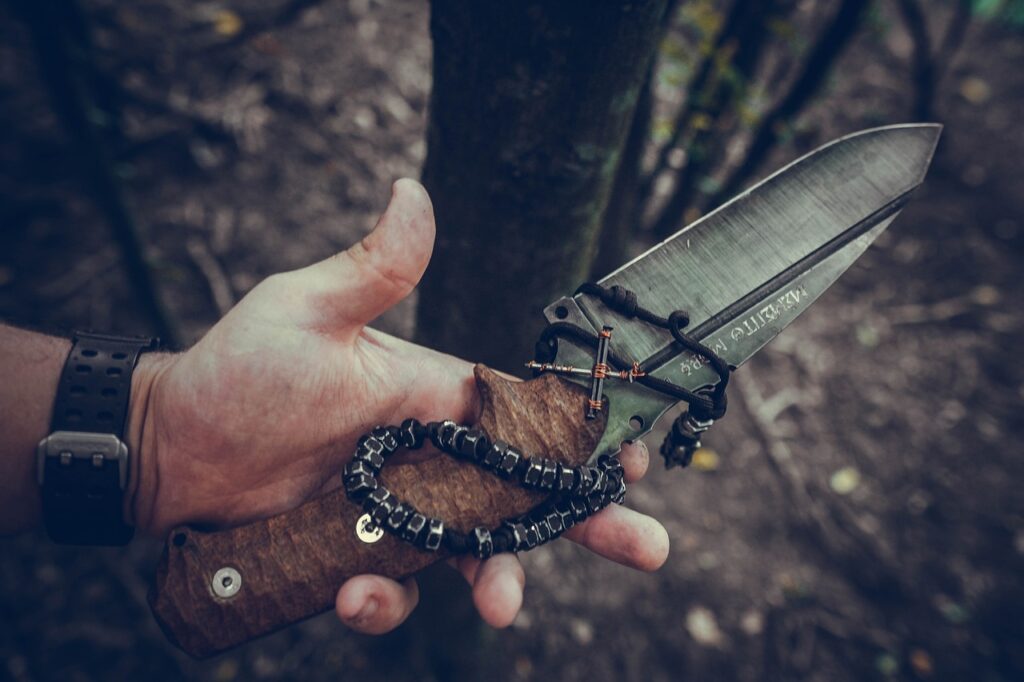
There are two reasons to love this knife:
- Easy to use.
- They are lightweight.
With this method, you just need to put on the necklace and carry the knife.
If you are a woman, this may feel like putting on a necklace you would wear to a wedding but if you are a man, it’ll be a different experience for you, allowing you to understand how your woman may feel when she wears it. Haha.
Using a neck knife is very easy, but it has some cons as well such as:
- You might feel irritated around your neck if you aren’t used to it.
- As the knife is carried from the sheath, it might fall anytime you jump down, and you may lose it. If you plan to use it, ensure to hang it outside of your shirt so it doesn’t fall inside your body.
- If it gets caught in any machine, it can drag you down, and it’ll cause a really big problem.
I only use this knife when I’m camping or hiking as I’m not a big fan of this method.
8. Static line
This is similar to the neck knife, but instead of placing it near your neck, you just attach the paracord to the sheath and the pants, and put it in your pocket.
There is a minimal possibility of dropping the knife, as both the sheath and the knife are securely locked in place with your pants.
I opt for a static line when some of the knife is heavy and there is a chance of it falling off.
If you want to know more about carrying your survival knife, watch this video.
9. Backpack Carry
If you are planning to travel outdoors with a backpack, storing and carrying your knife in it could be the right choice. Use a dedicated compartment to store to ensure it doesn’t get damaged during. Organizing the knife with other survival items could help you find it easily.
To safeguard the blade, storing the knife in a sheath would be better. This reduces the accidental damage from other items you are carrying in your bag.
I carry my knives in a backpack whenever I plan a camping trip with my friends.
10. Ankle Sheath Carry
Similar to boot, this method helps you carry the knife without garnering attention from anyone. Before you opt this method, check if the sheath fits perfectly in your ankle and doesn’t trouble you while walking.
I usually go with this method when I wear pants while hunting. Some brands like Promate offer knives with straps and sheath and I suggest you get such models for better compatibility.
FAQs
1. Why should I carry a survival knife?
You need to carry it to protect yourself from predators, use it as a tool to build shelter, start a fire, food preparation, etc. It is almost impossible to survive in dangerous situations without it.
2. What size knife is best for everyday carry?
The most common size for everyday carry is between 2.5-3.5 inches blade. It takes very little space in your pocket, belt or a sheath and is convenient to access.
3. What type of knife is best for everyday use?
Pocket knives are considered the best to carry every day and perform daily tasks like opening boxes, slicing food, whittling or outdoors tasks like surviving, camping, hiking, fishing etc.
4. Where is the best place to carry a knife for self-defense?
Carrying a knife in the waistband is one of the quickest ways to access it and protect yourself.
Conclusion
It could be confusing sometimes to go with the right way to carry a survival knife, but the answer depends on you. If you are a beginner as a survivalist, I would suggest you go with the belt carry with some variations like I did in my early days of hunting.
If you have spent a decent amount of time outdoors, Dangler Loop or Scout Carry could be the right choice for you. If you have any questions, do let me know and I’ll get back to you shortly. Cheers!